Human-Powered Wooden Car
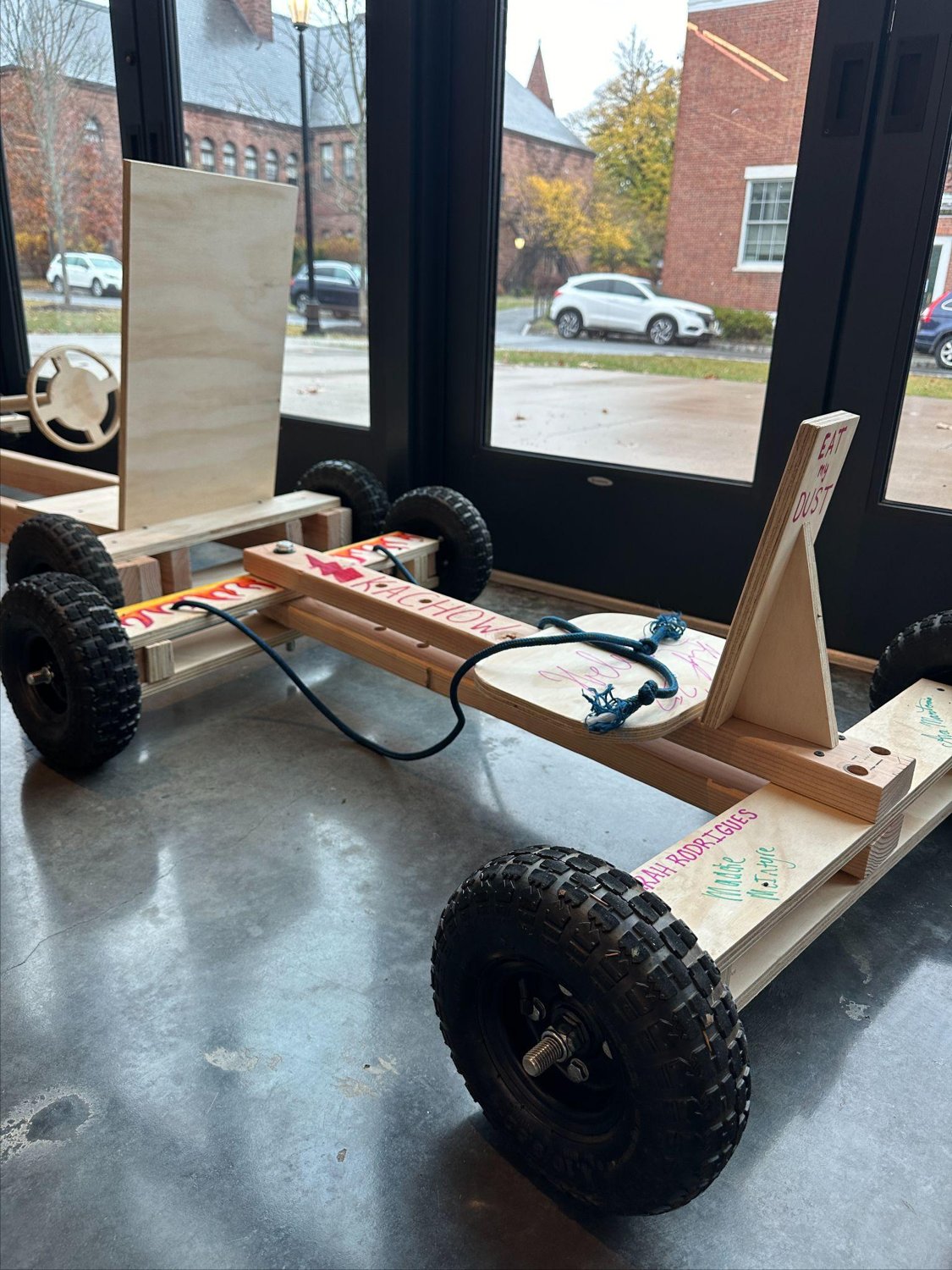
A life-sized, human-powered wooden car built from plywood and 2×4s — with a merged rope-and-foot steering system (and flames).
Built with Sarah Rodrigues, Maddie, Helen, and Najja for Intro to Mechanical Engineering (Ms. Selan) — the term’s second project: a life-sized, human-powered wooden vehicle, modeled in Fusion 360 and built from plywood and 2×4s under tight material limits.
From sketches to Fusion
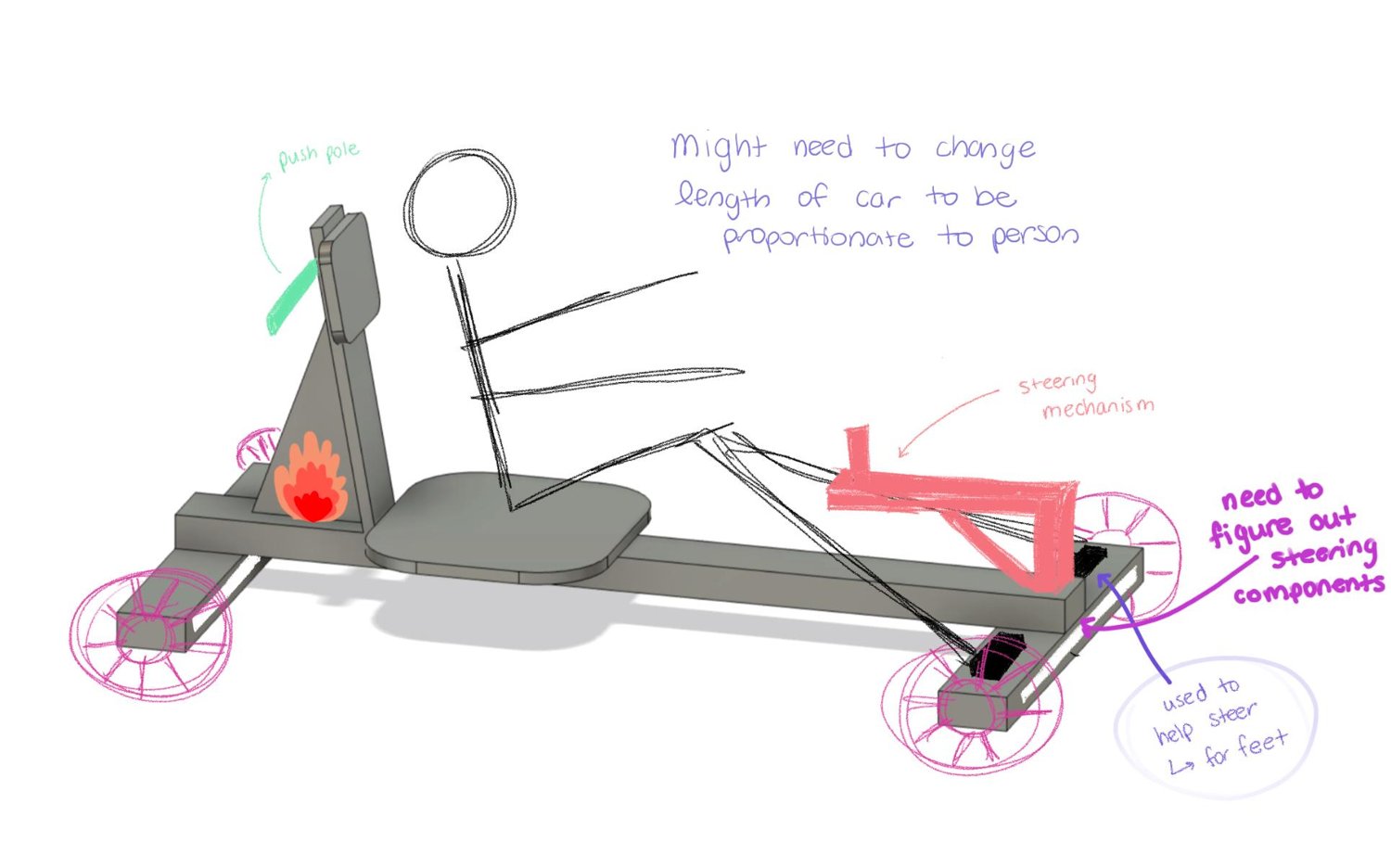
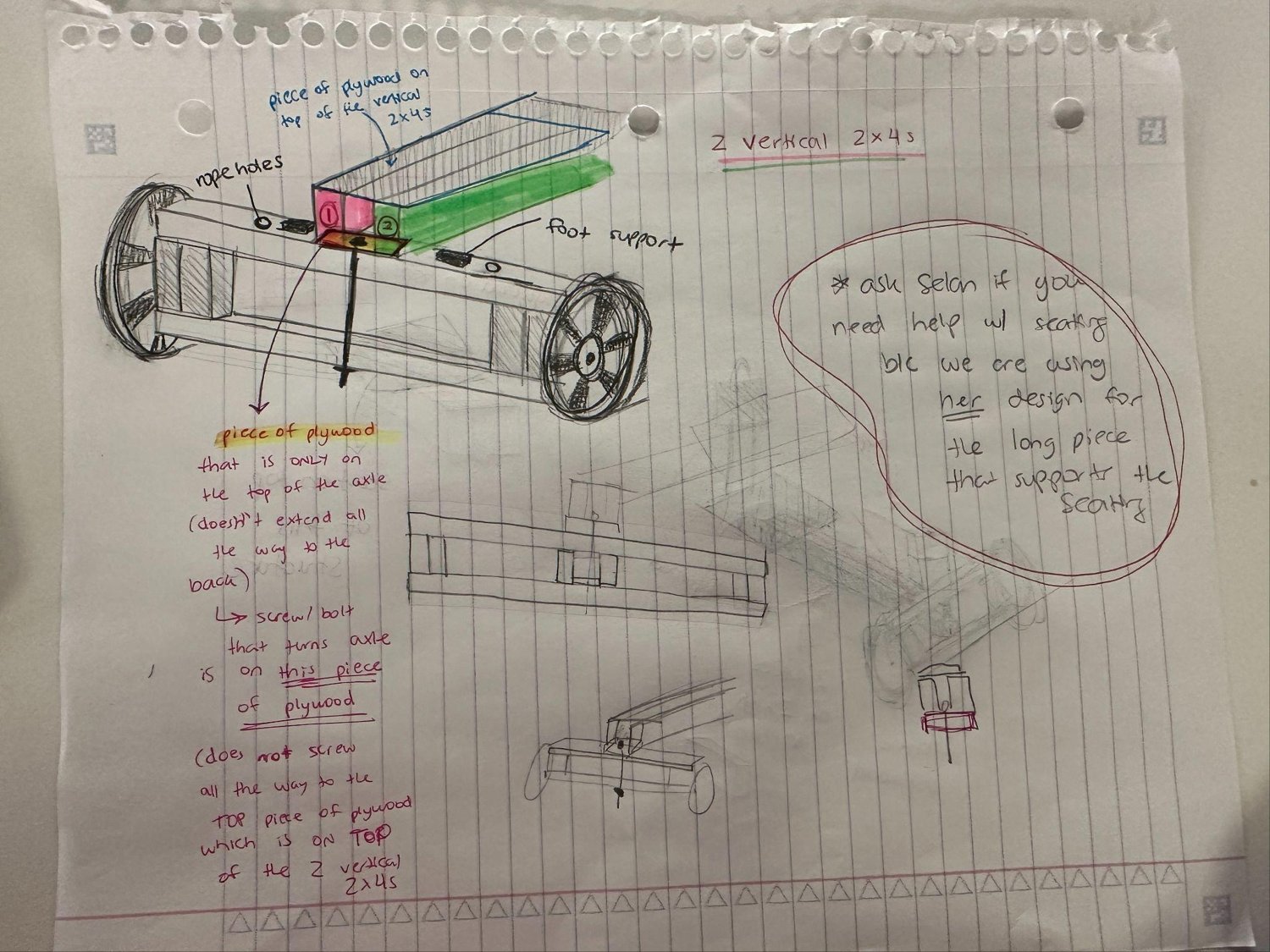
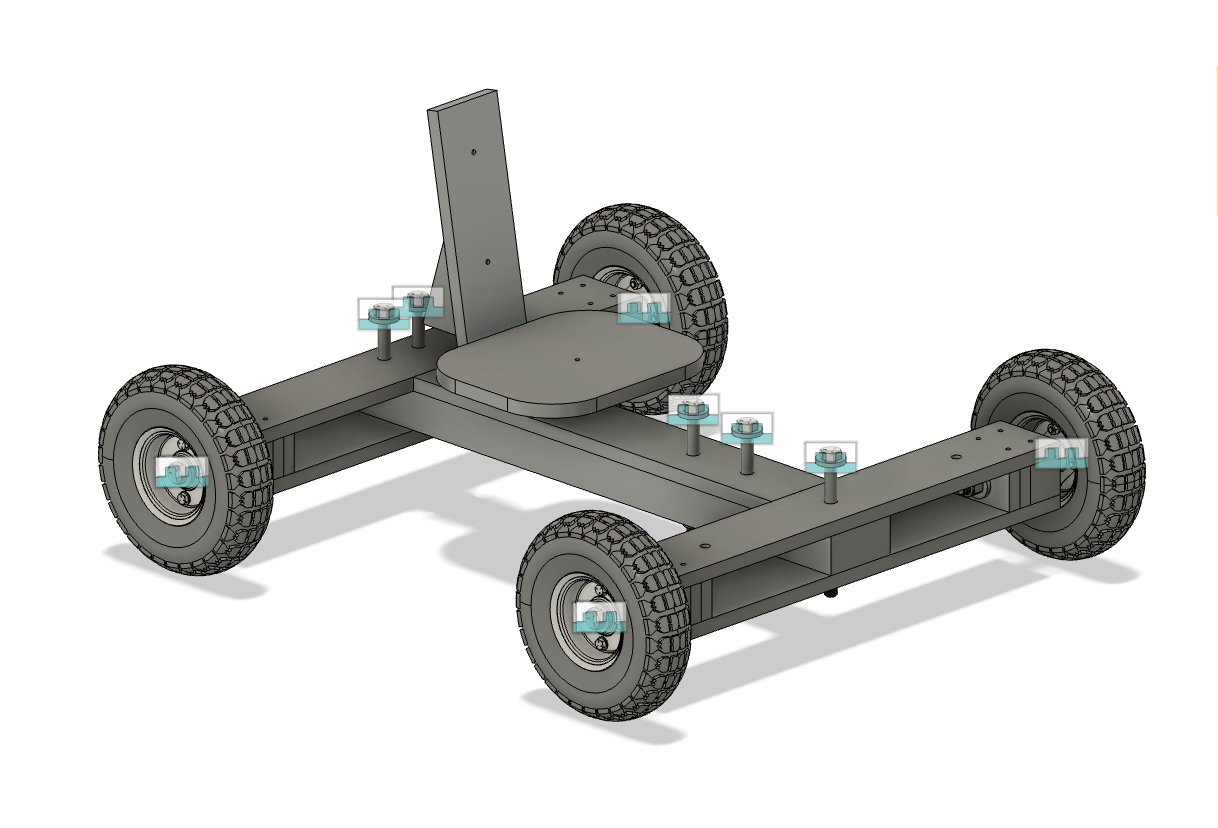
Like the bridge, we began with sketches and then built the car in Fusion 360. Because we were working on the Fusion file on my computer, I ended up primarily responsible for the model — most of the edits and iterations ran through me, which I’m proud of.
Steering: rope and foot
The one thing our group debated was how to steer. We weighed Ackermann, rope, and foot steering; Maddie, Sarah, and I leaned toward foot steering, while Helen and Najja liked rope. Instead of picking one, we merged them — and it turned out to be the right call. The foot steering would have worked on its own, but the ropes gave us far more nuanced control and made the car genuinely easy to turn.
Problem-solving under constraints
- Working across two class sections was harder than expected — we started a group chat and sent an end-of-class summary each day so everyone stayed on the same page.
- Sharing materials: when other groups ran short on bolts, I came in after class to add extra screws so we could free ours up — which meant re-working parts we’d already built. Next time I’d plan the material budget across groups before assembly, not during.
- Seat sizing: confusion about how much plywood we had led us to shrink every component — only to find we had plenty left over. The seat still worked (and it was actually easier to push the driver by the shoulders anyway).
The build
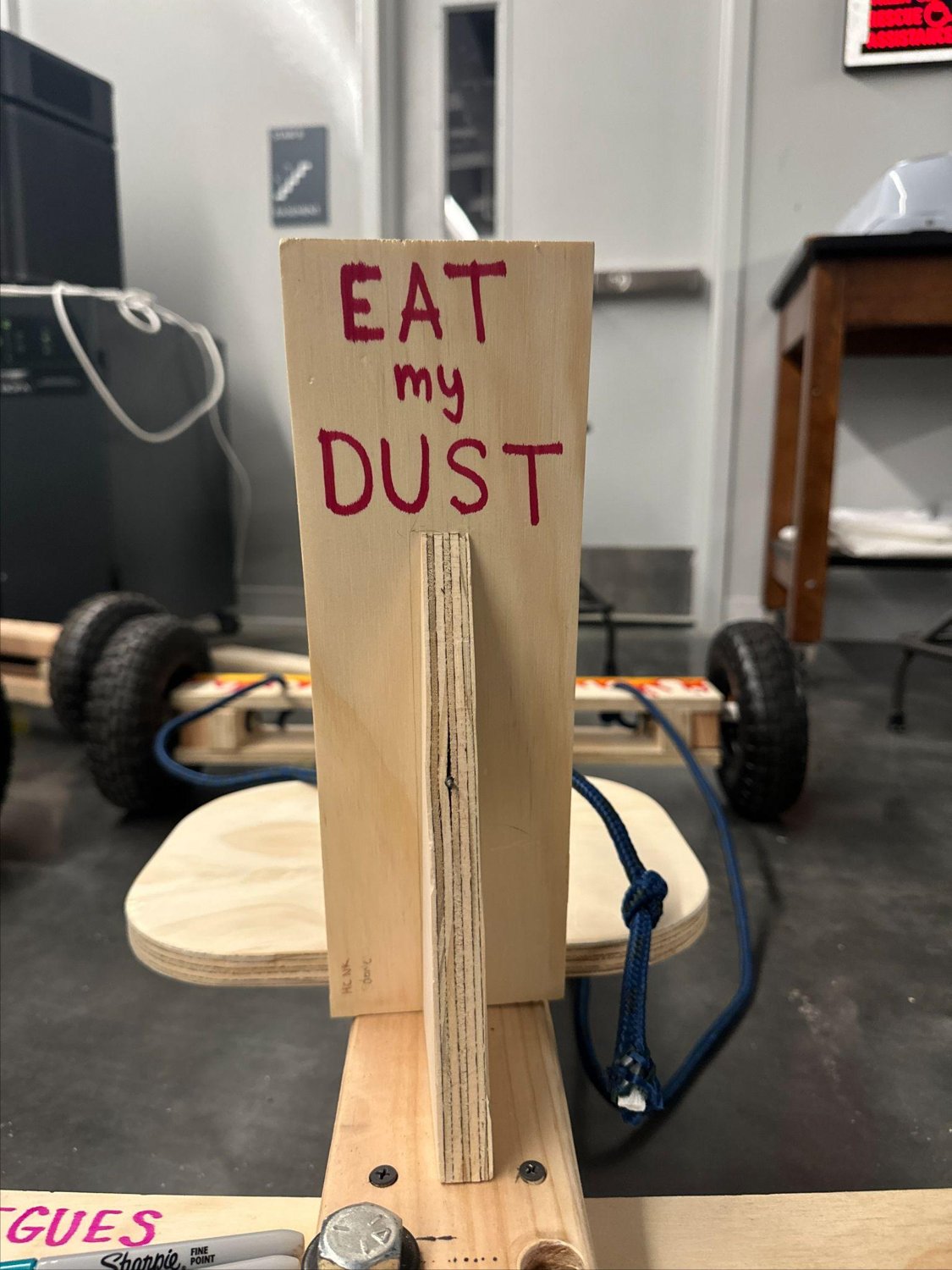
Sarah and I had fun giving the car personality — “KACHOW” and a lightning bolt down the spine, painted flames on the axles, and “EAT my DUST” on the seat-back. (I’m convinced the flames made it a little faster.)
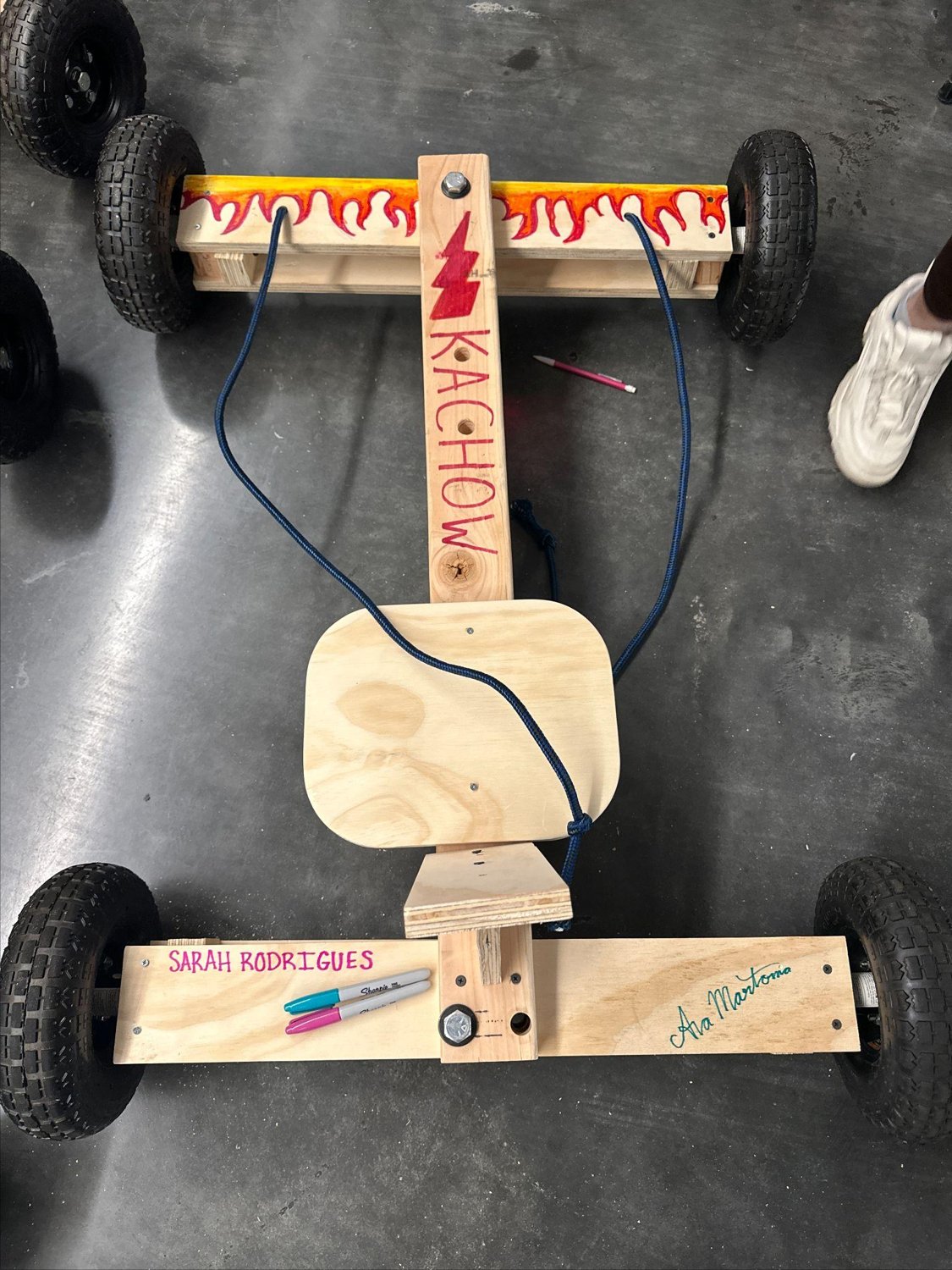
I’m proudest of how much we iterated — before and during the build — and of how the merged rope-and-foot steering came together in the end.