Marquetry Flower Press
A working flower press whose lid is a marquetry bouquet of lilies and irises — laser-cut veneer, made as a just-for-fun promposal.
Overview
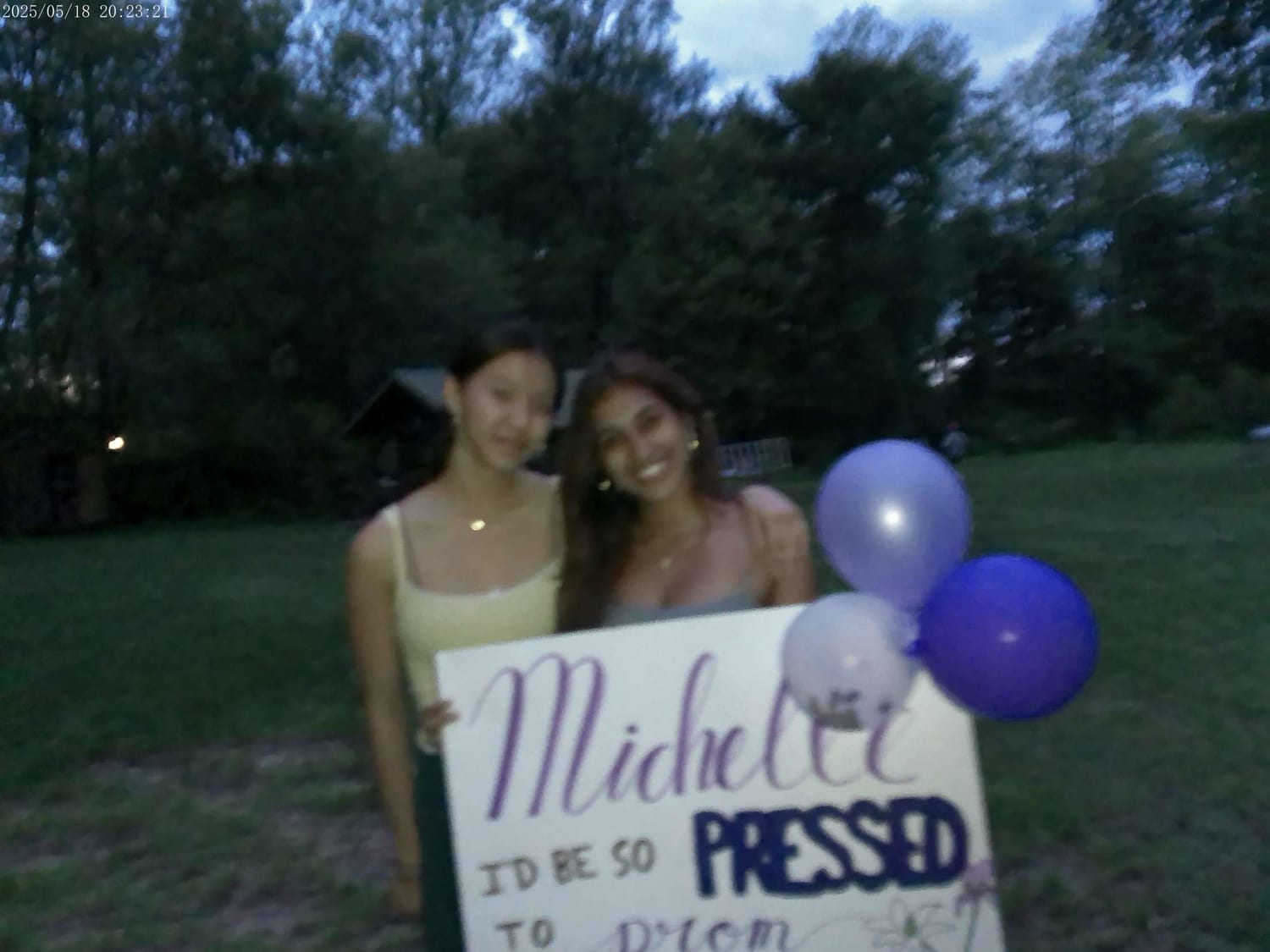
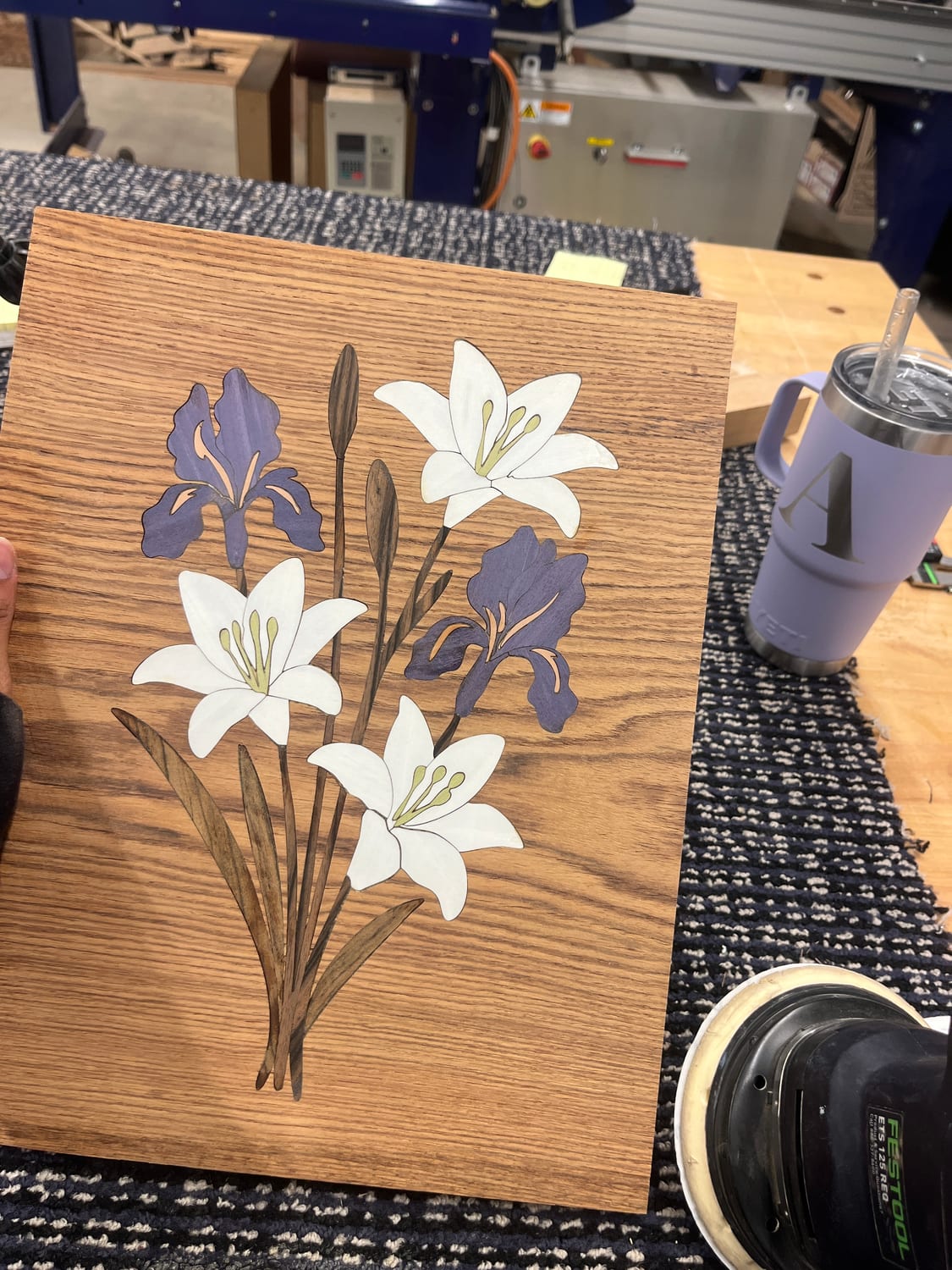
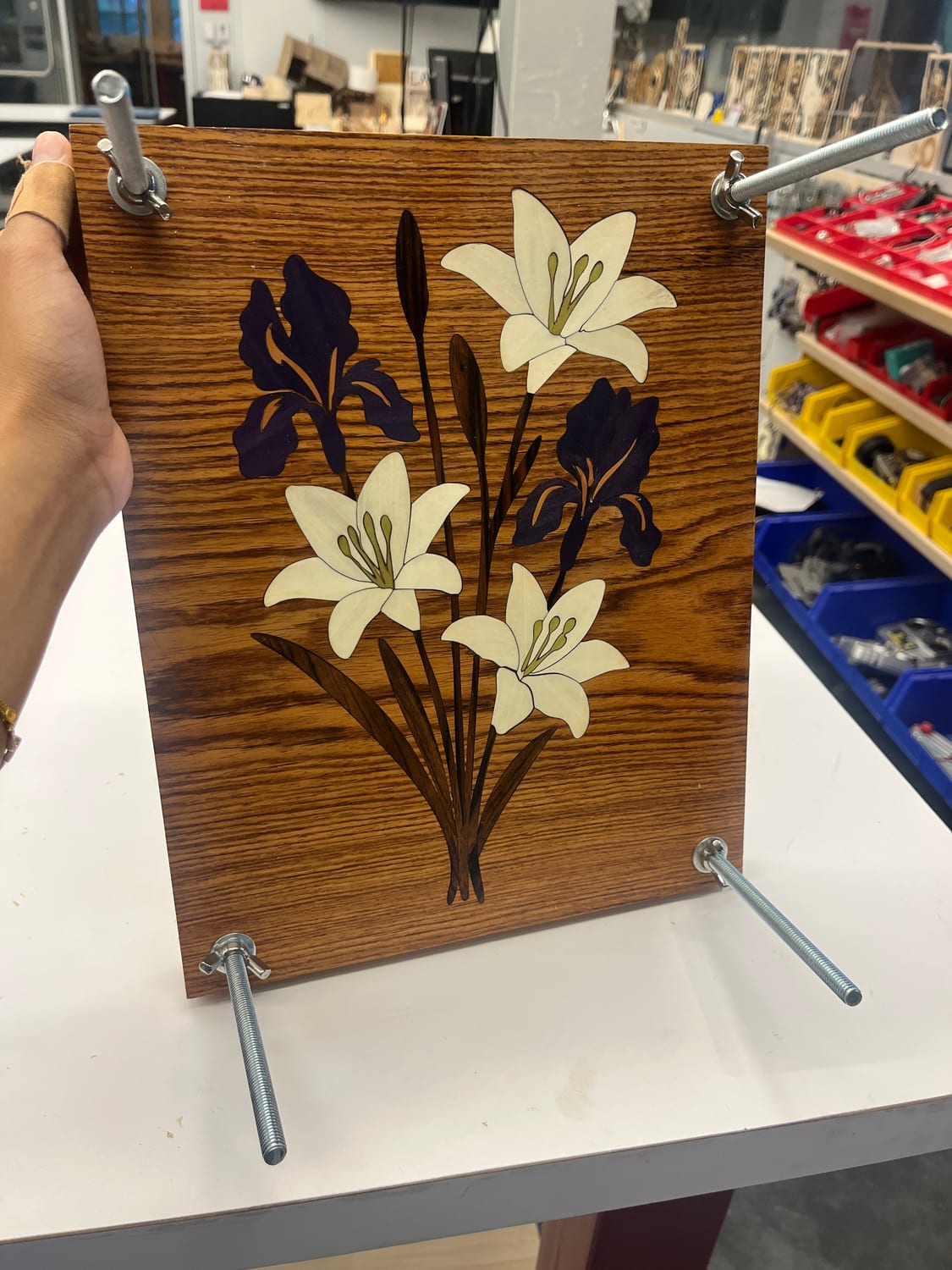
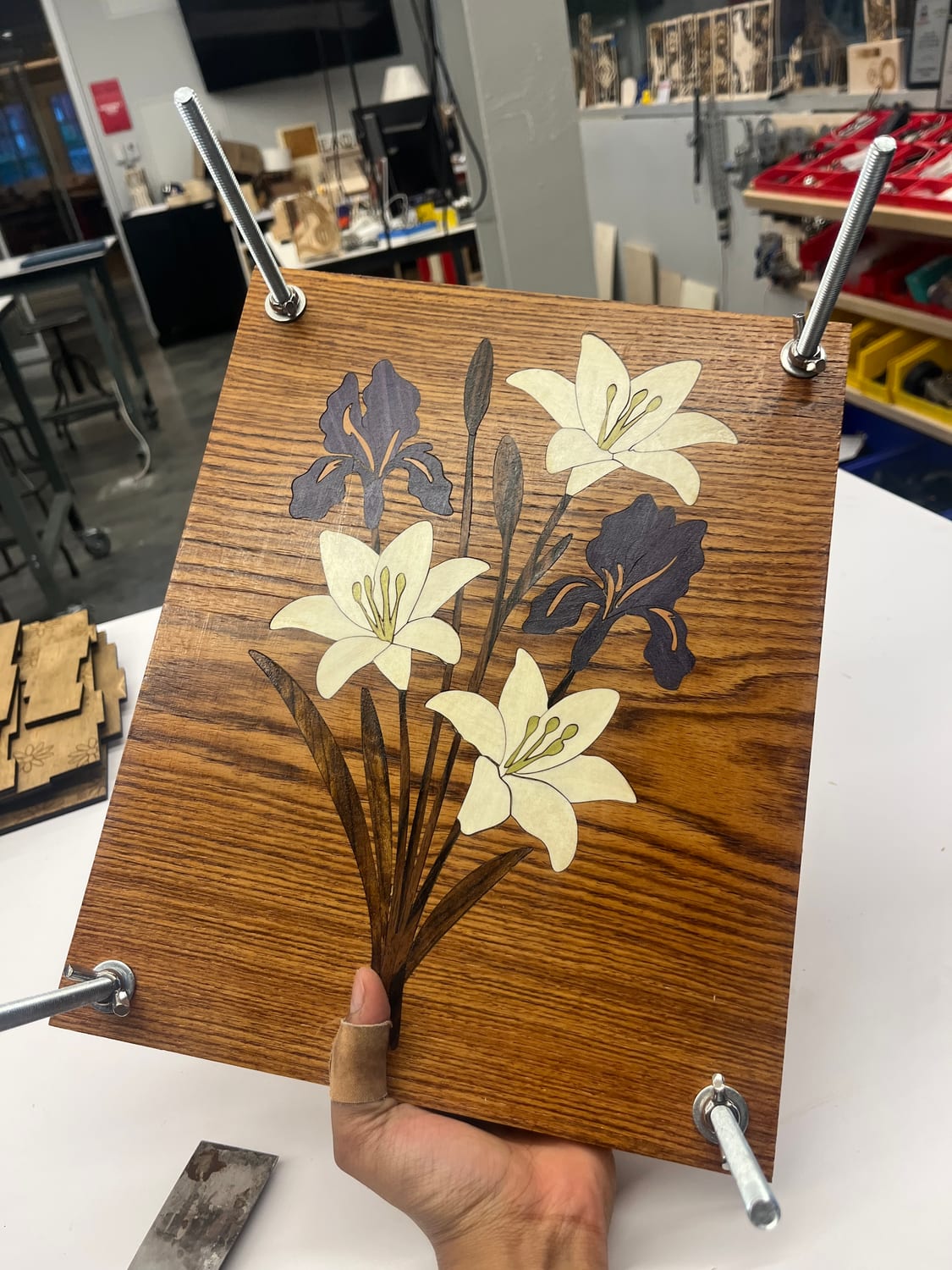
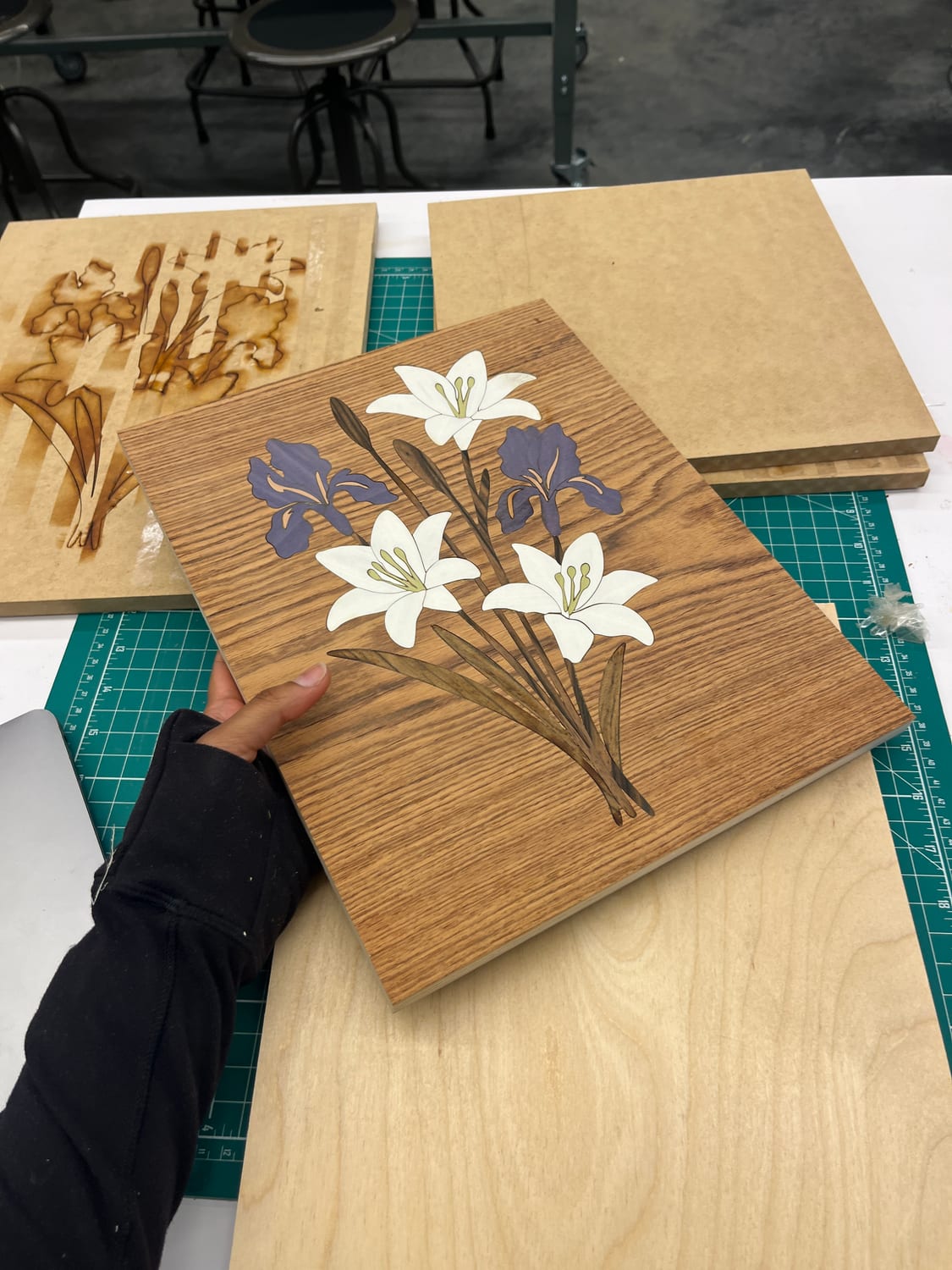
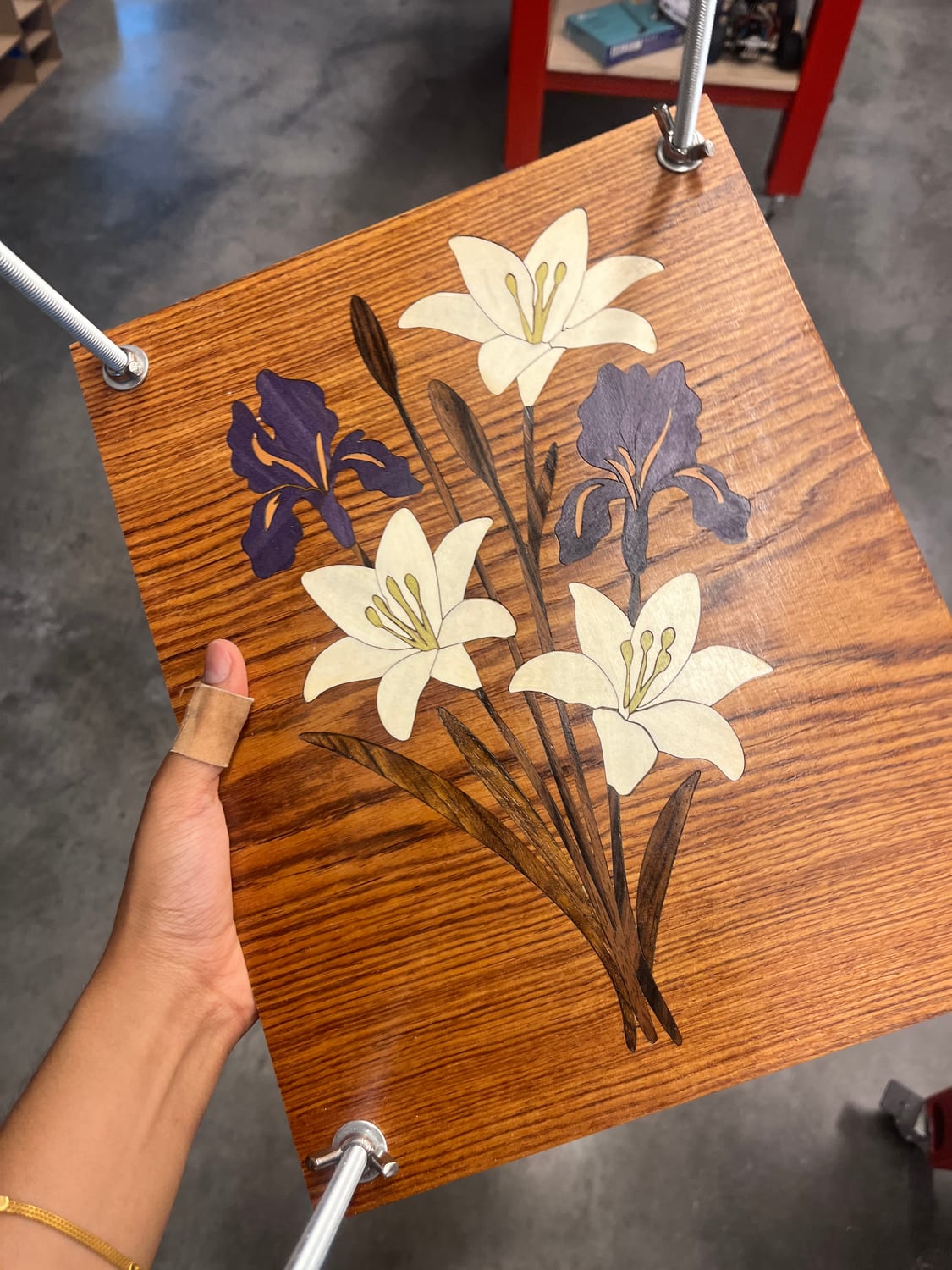
A working flower press — two rigid boards you tighten down to flatten and dry real flowers — with the top board given over to a marquetry bouquet. The lid is a spray of white lilies and purple irises in oak, walnut and dyed veneers, and the whole thing is a small joke about its own job: I made it as a just-for-fun promposal (“…so PRESSED to prom”).
Drawing it for the laser
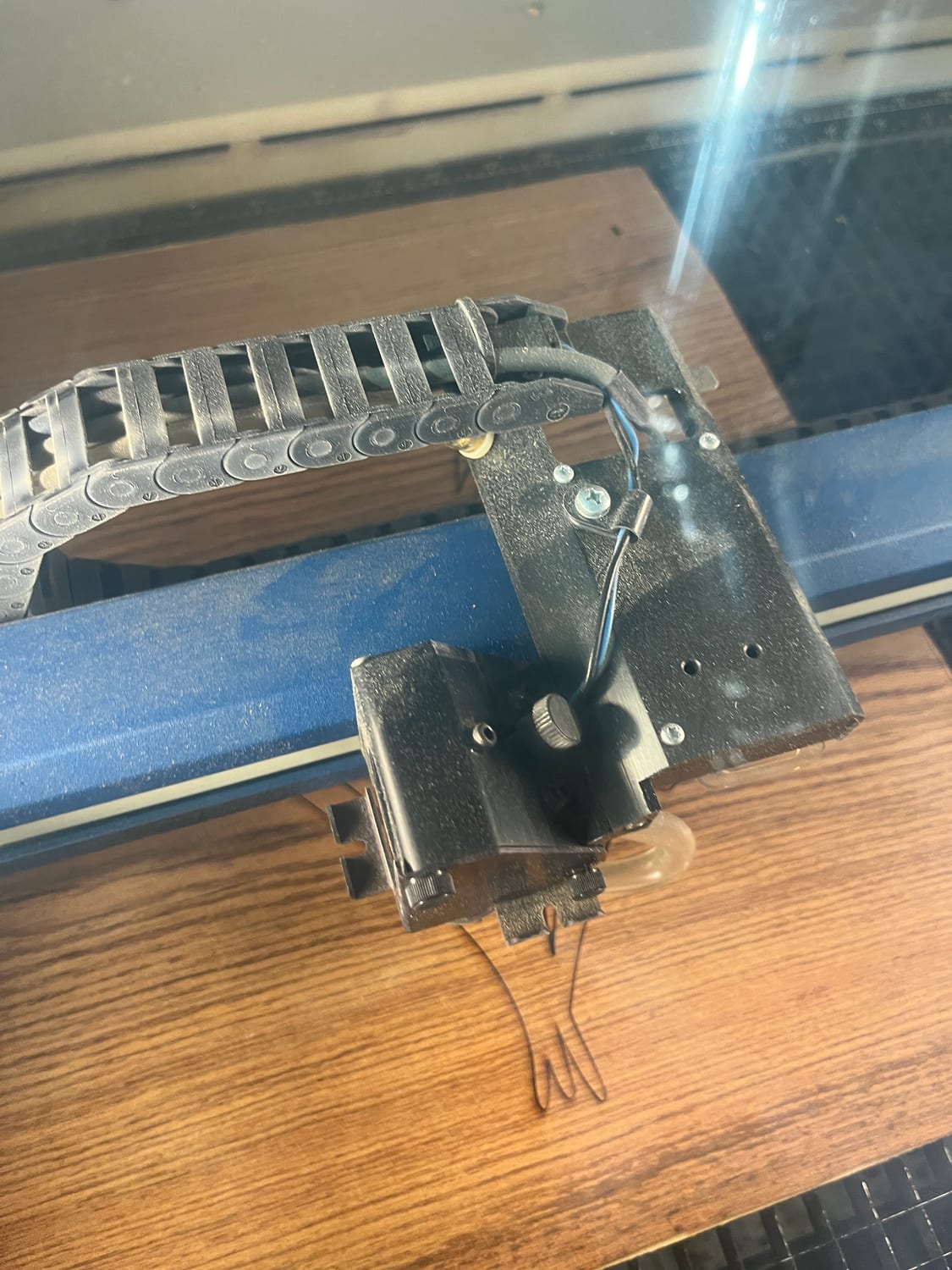
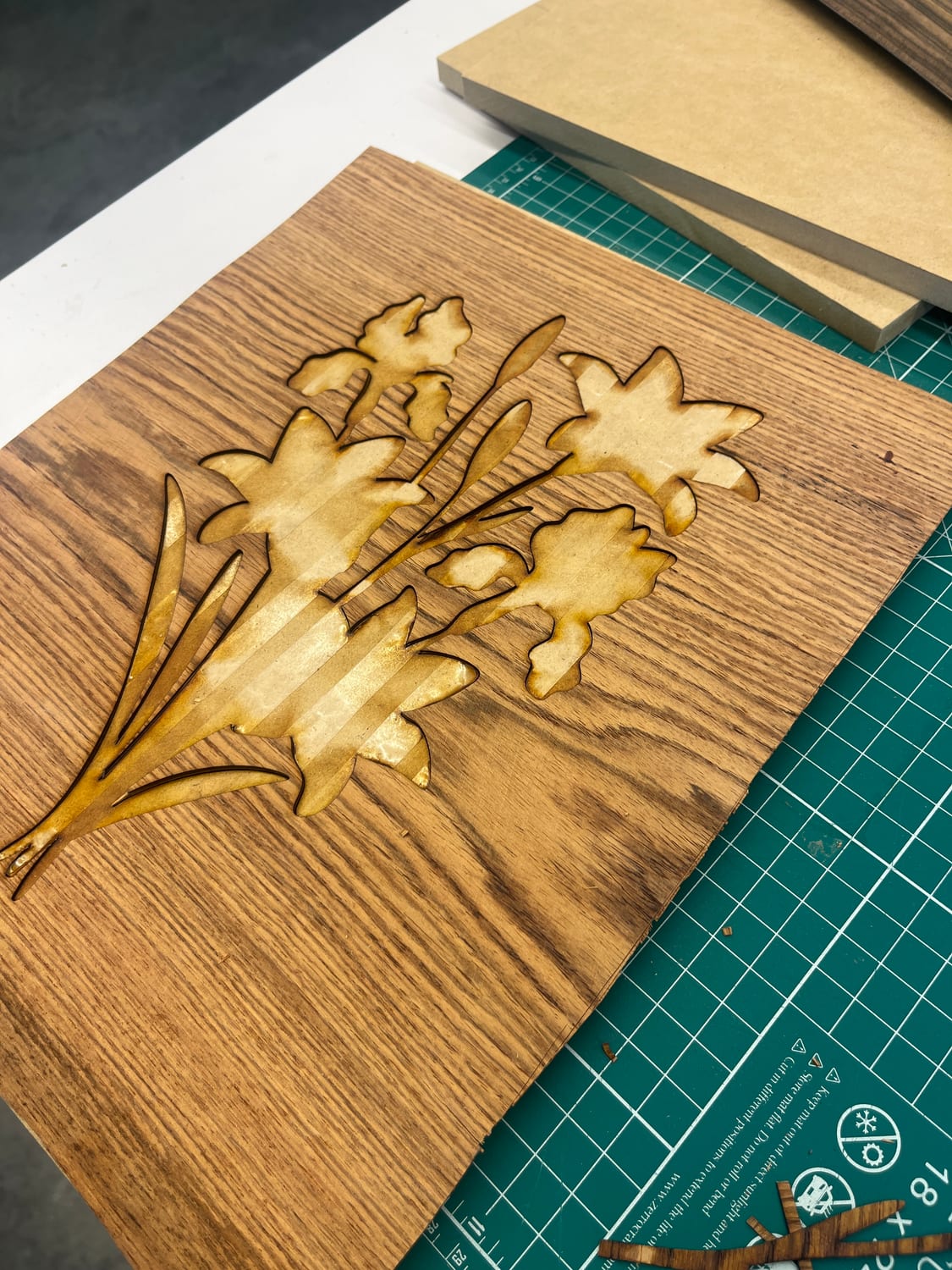
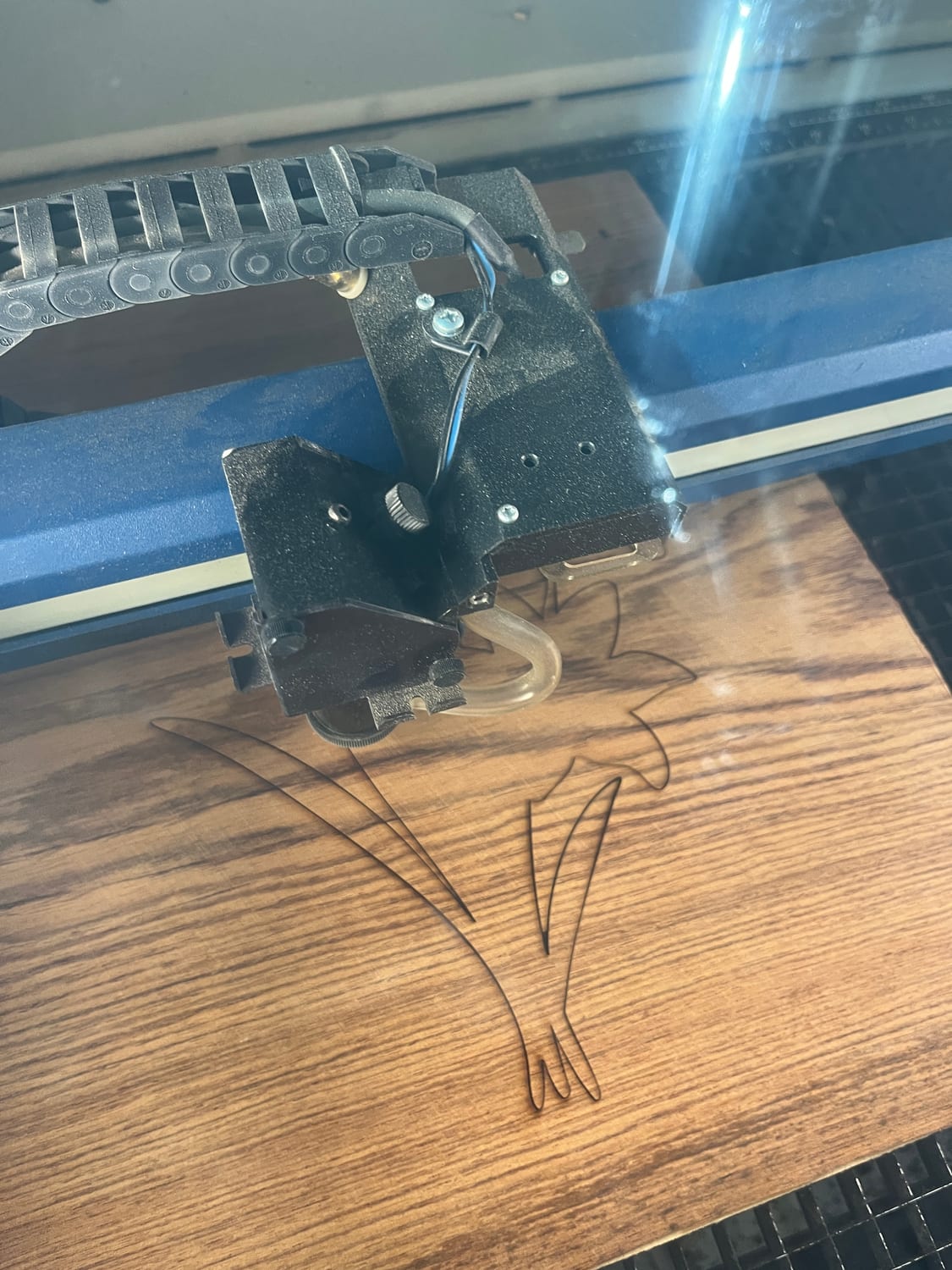
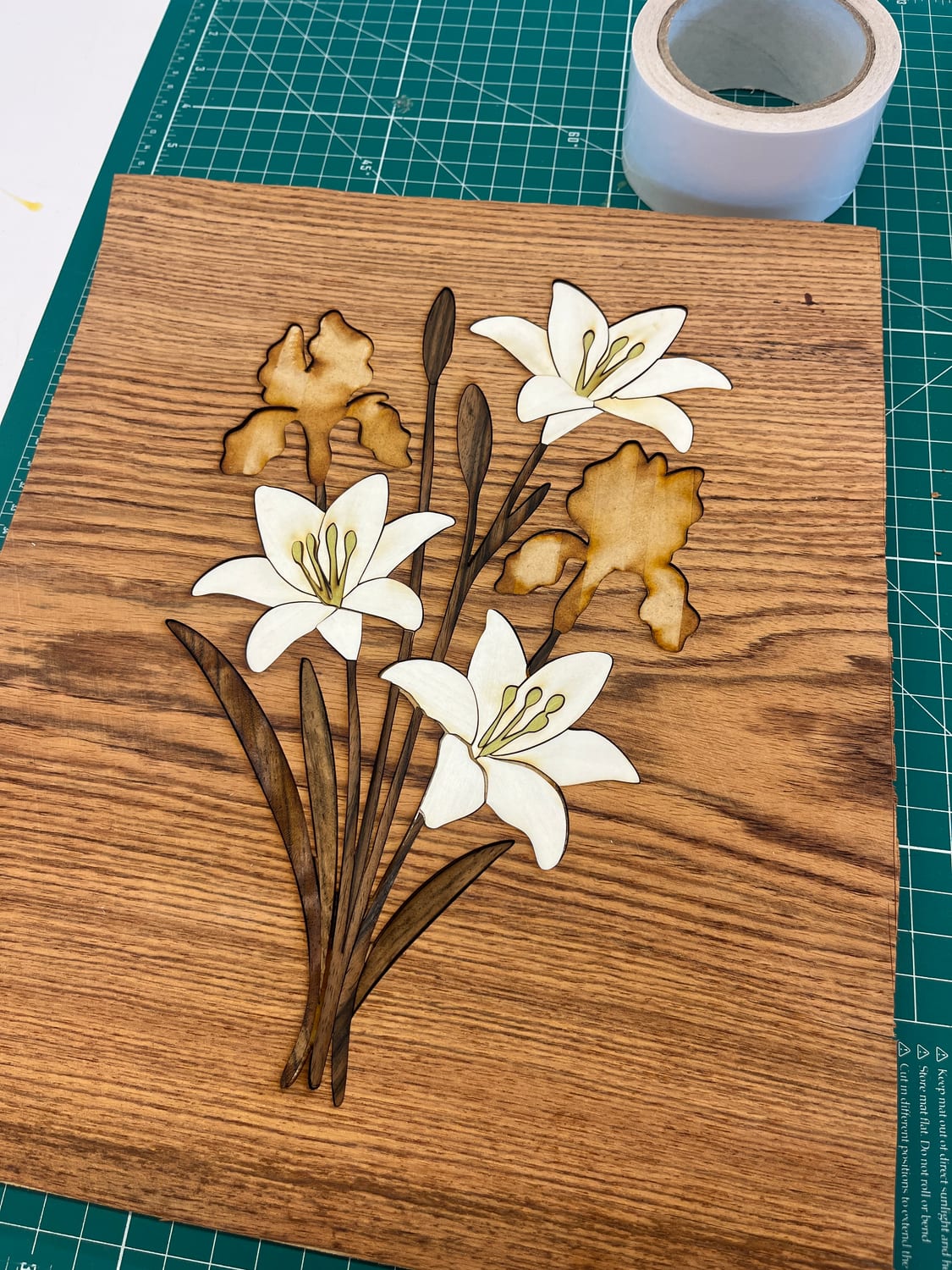
Every petal, leaf and iris is a separate piece of veneer, so the bouquet started as vector artwork — each shape drawn as its own closed path — and was cut on a laser cutter rather than by hand with a knife. (An earlier version of this page said the design files were lost; they weren’t the point anyway — the burnt edges in these photos are the tell that this was laser work, so the vectors existed.) The clip below is me marking out placement on the veneer in the studio.
Taping and gluing it down
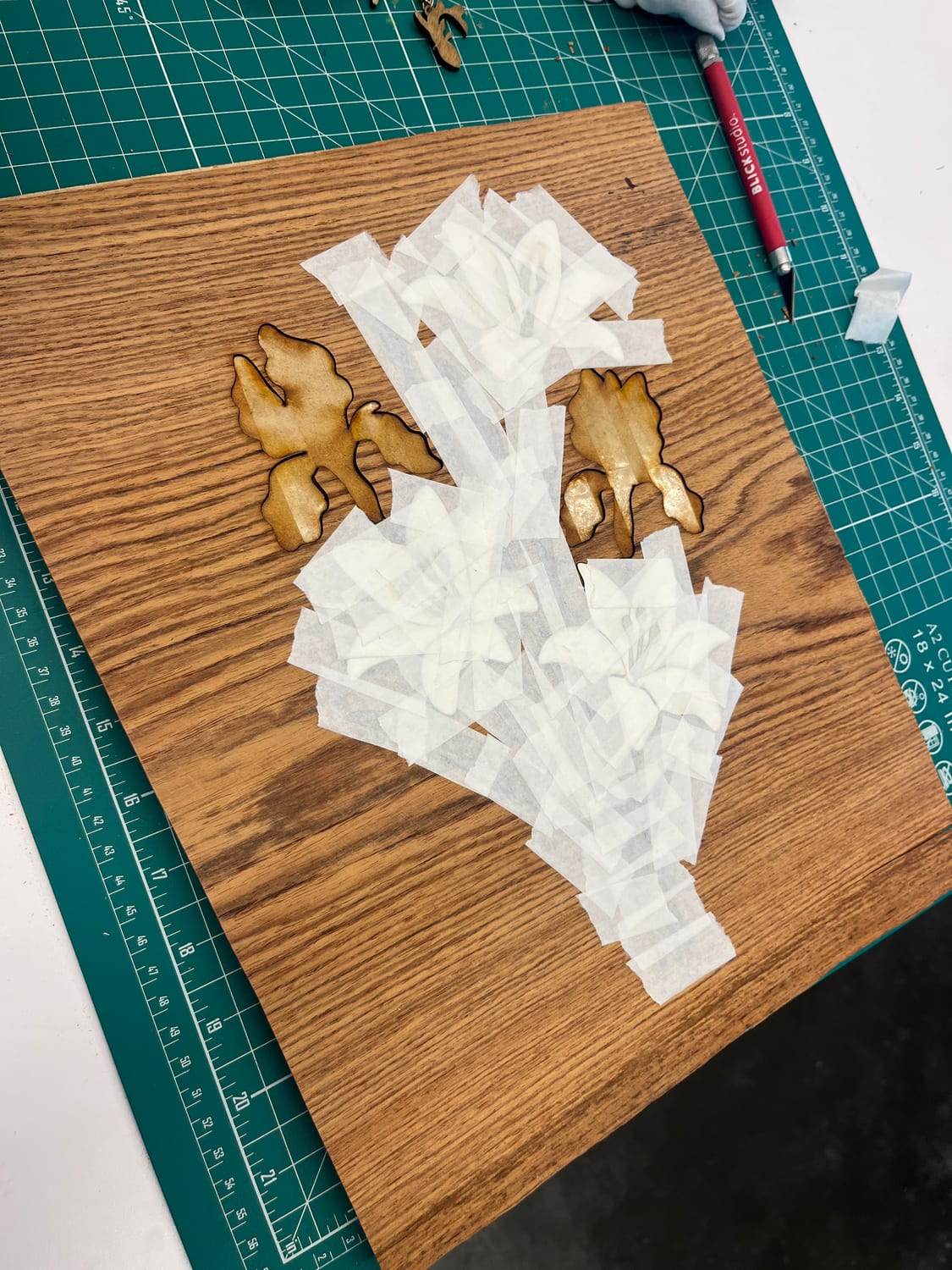
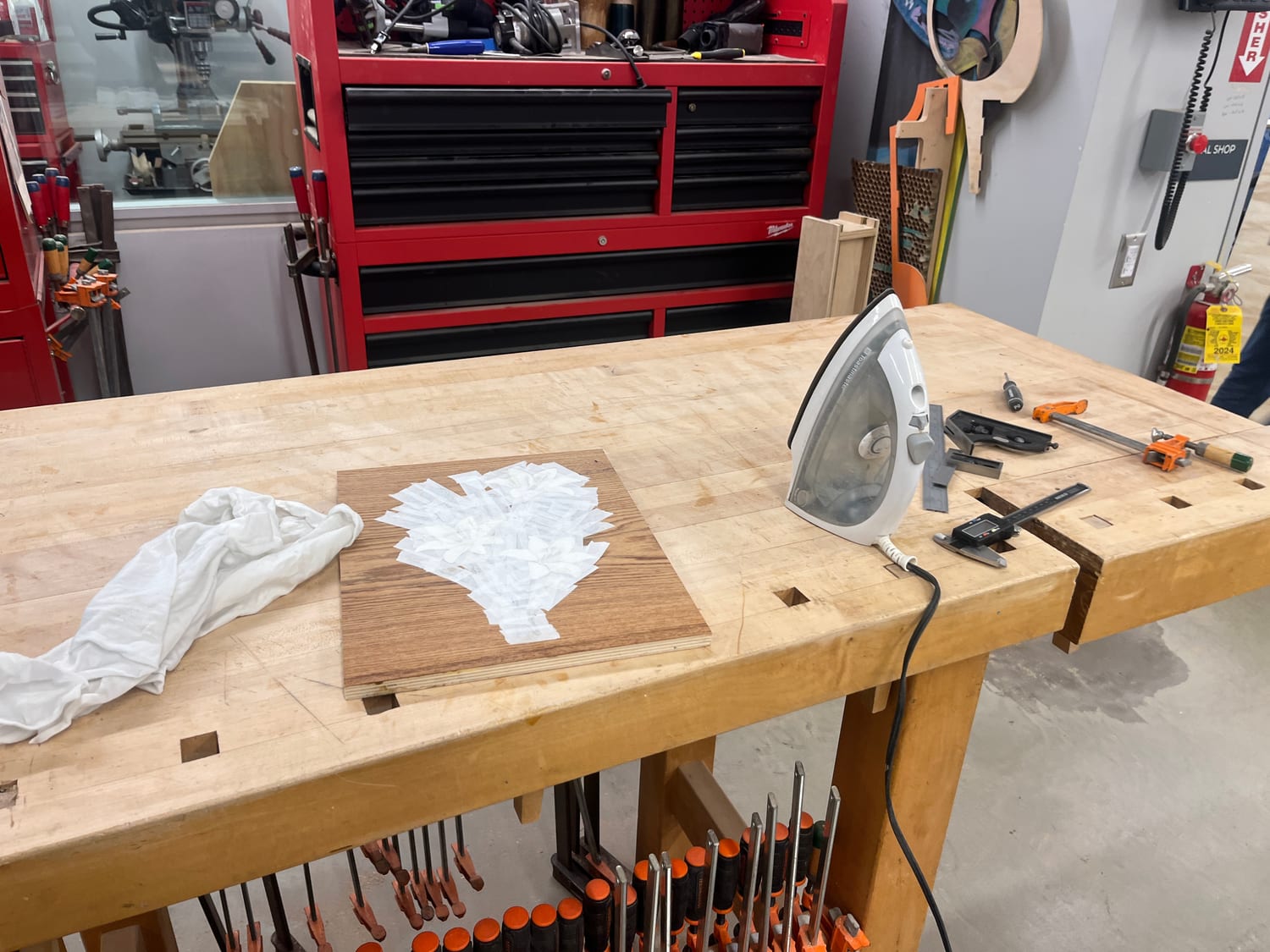
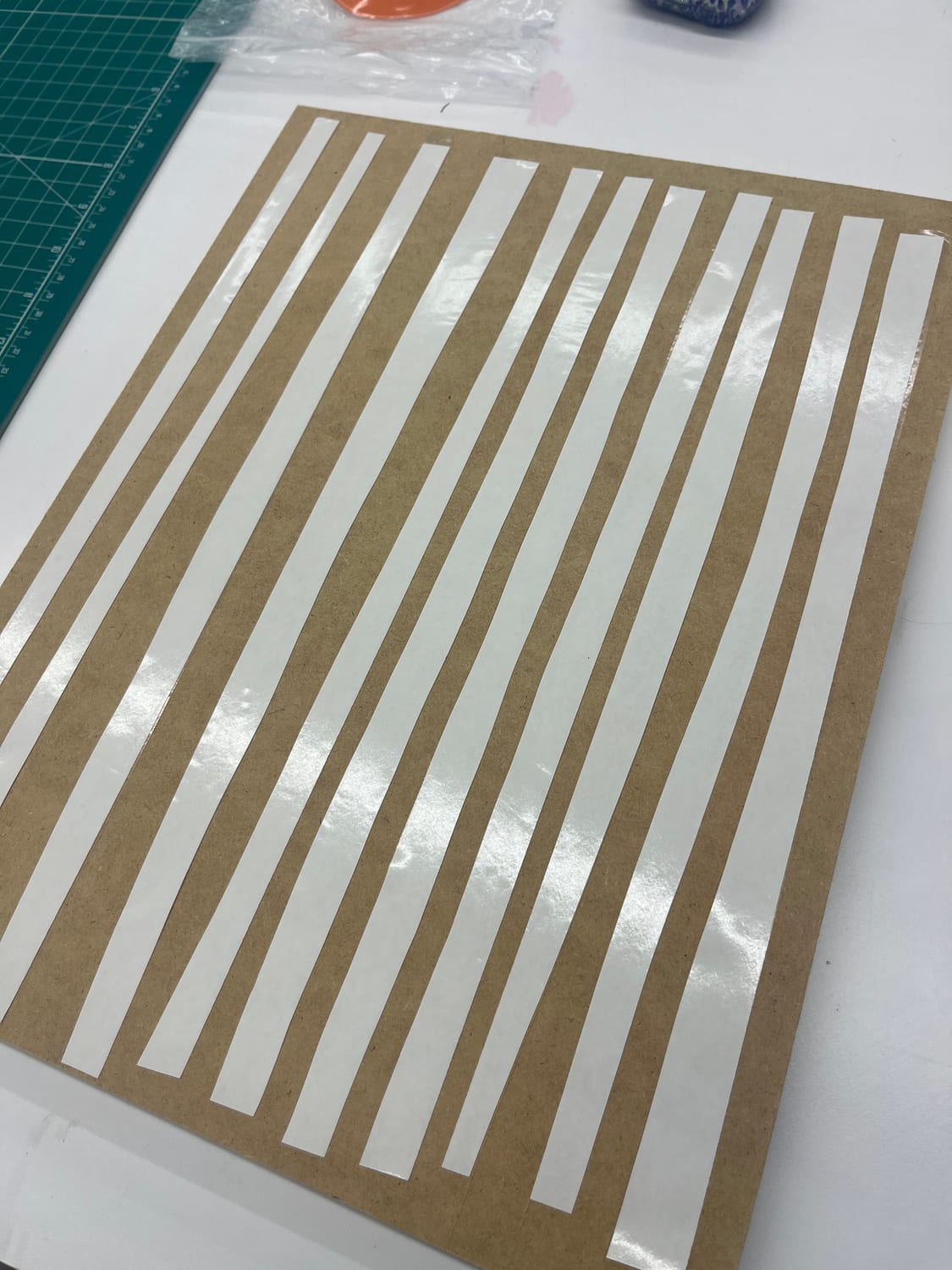
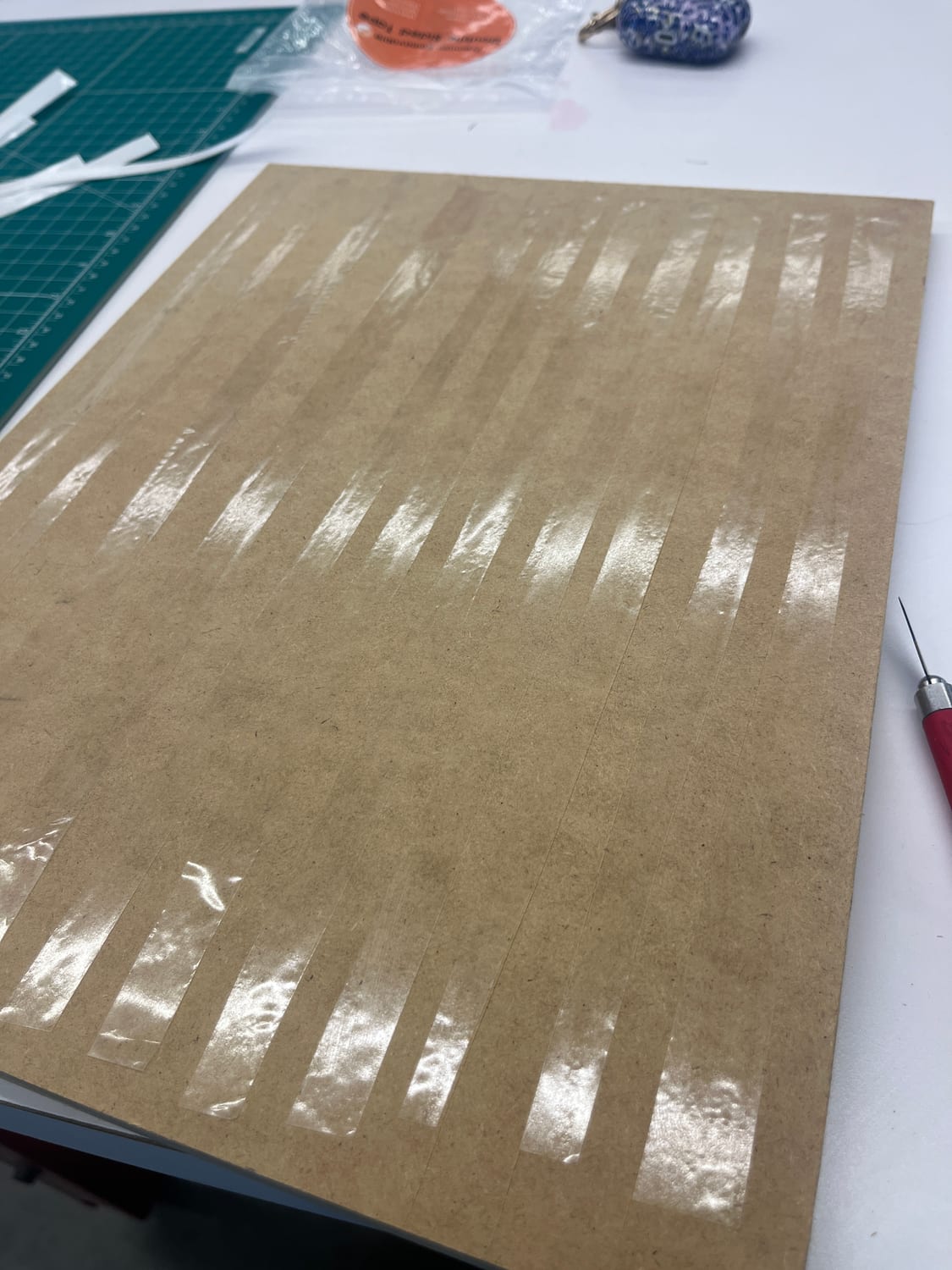
Cut veneer is fragile and wants to curl, so the pieces are held face-up with veneer tape — a low-tack paper tape — while the bouquet is assembled. Then the whole thing is glued onto a solid oak ground panel: a household iron does the pressing, and heat through the tape sets the glue and pulls the pieces flat against the board in one pass.
The press itself
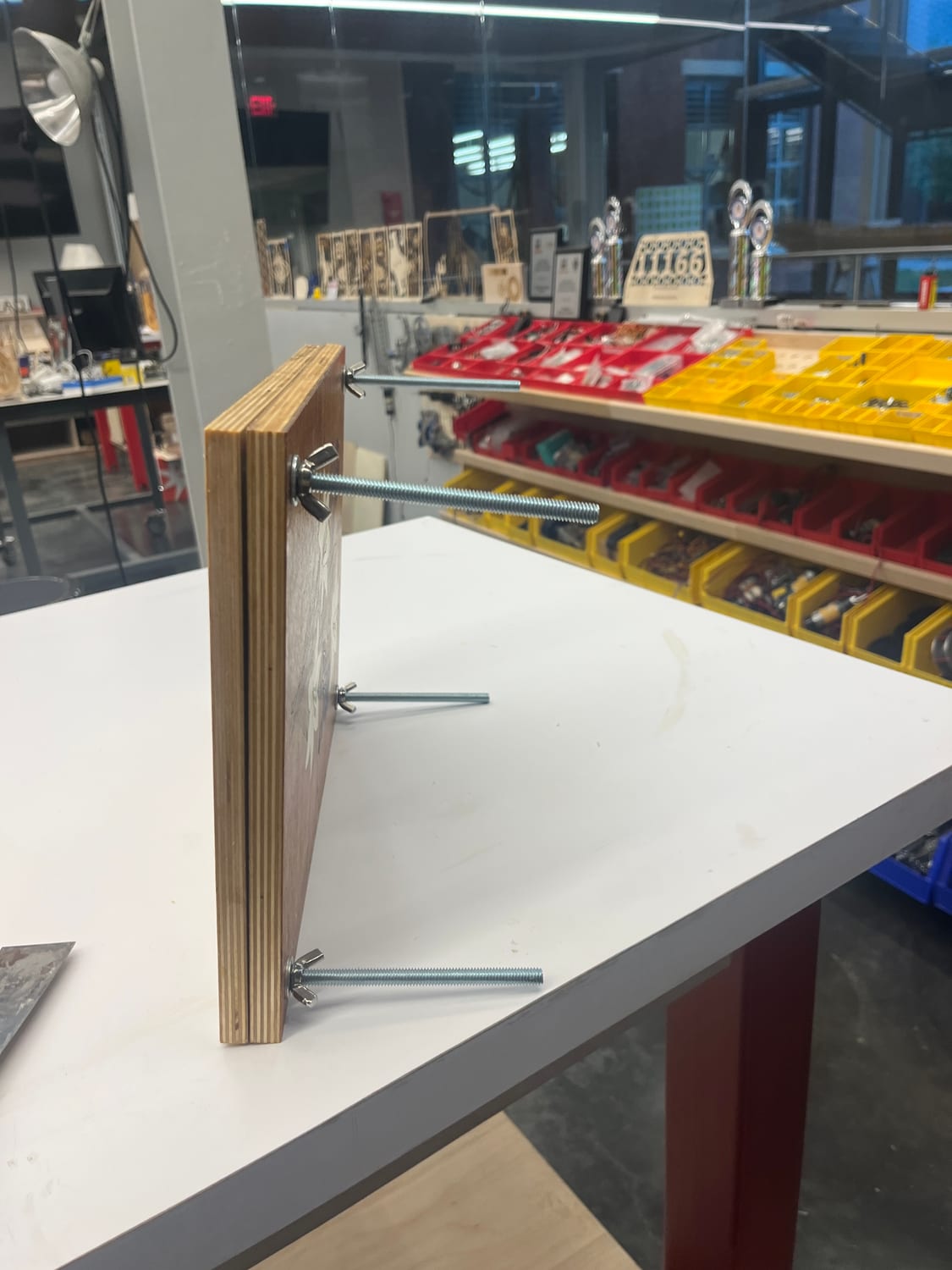
The object isn’t just a decorated panel — it’s a real press. Two thick plywood boards sandwich together on four threaded rods, and wing nuts draw them down to squeeze whatever’s between them. So the marquetry lid is also the working top of the tool.
Finishing
Once the glue cured I sanded the face flush, peeled the veneer tape, and sealed it. With the tape gone the woods do all the color work — the cool white of the lily petals against the warm oak, the dyed purple of the irises, the walnut stems.
Why a flower press
A press is a good gift object: it’s useful, it lasts, and it quietly keeps giving — you press flowers from an occasion and keep them. The constraint was real, too — it had to actually clamp and hold flat, not just look like a plaque, which is why it ended up as plywood, rods and wing nuts under a marquetry face rather than a solid decorative panel.
The promposal
It was, in the end, a just-for-fun promposal — no grand romance, just a good pun and a handmade thing to go with it. A flower press, so the ask wrote itself: “so PRESSED to prom.”