Henna-Inspired Luminary
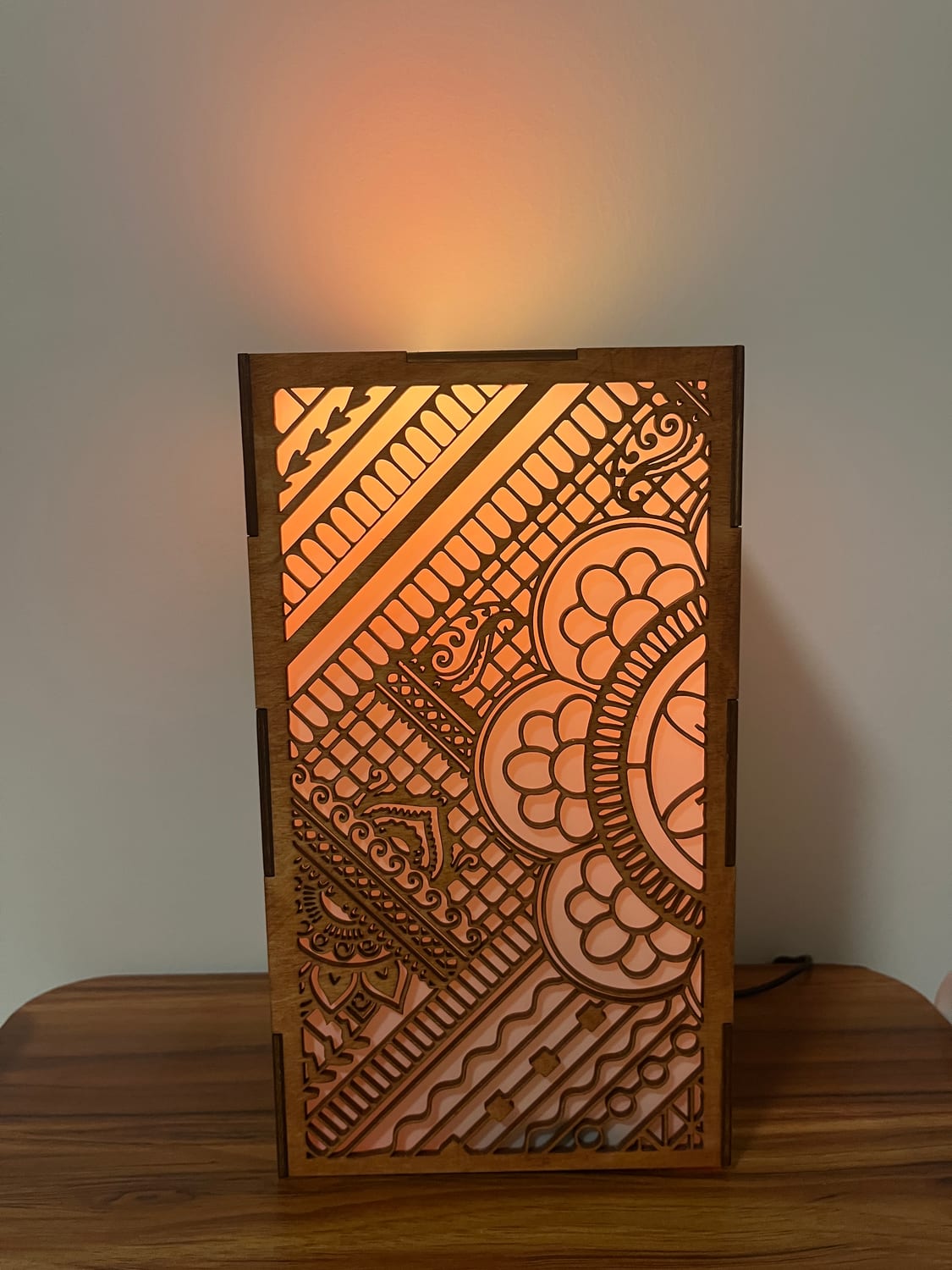
A laser-cut wooden lantern whose fretwork panels are drawn from mehndi — Indian henna art — where the whole design lives in the play of positive and negative space.
Built in Lawrenceville’s Explorations in Design studio.
The idea
For my luminary I took inspiration from henna. Henna is a big part of Indian culture — it’s customary to have it done for parties and celebrations — and mehndi designs live almost entirely in the interplay of positive and negative space, which is exactly what a fretwork lamp needs: the light only escapes where the material is cut away. It also let me put something personal and cultural into the piece.
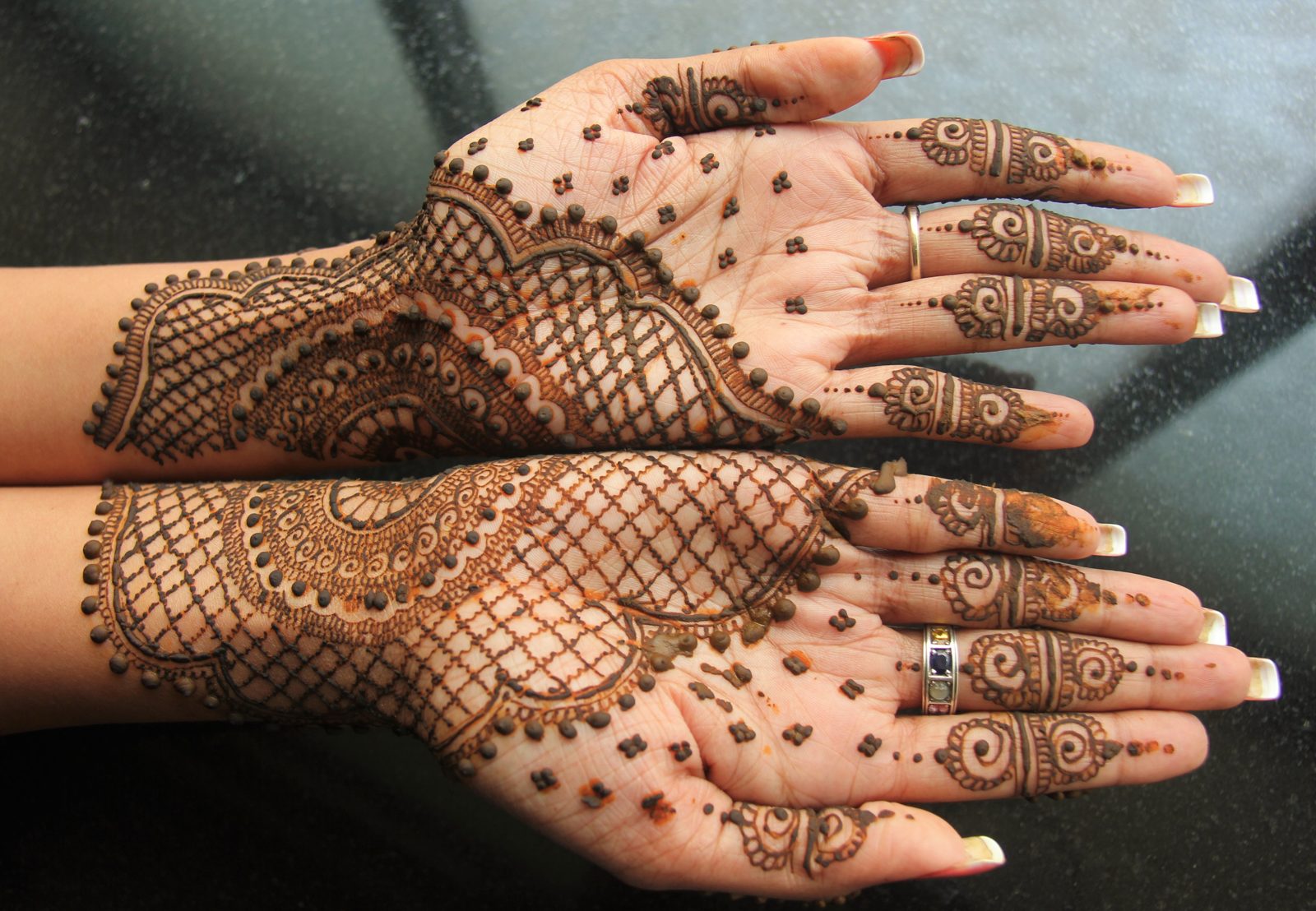
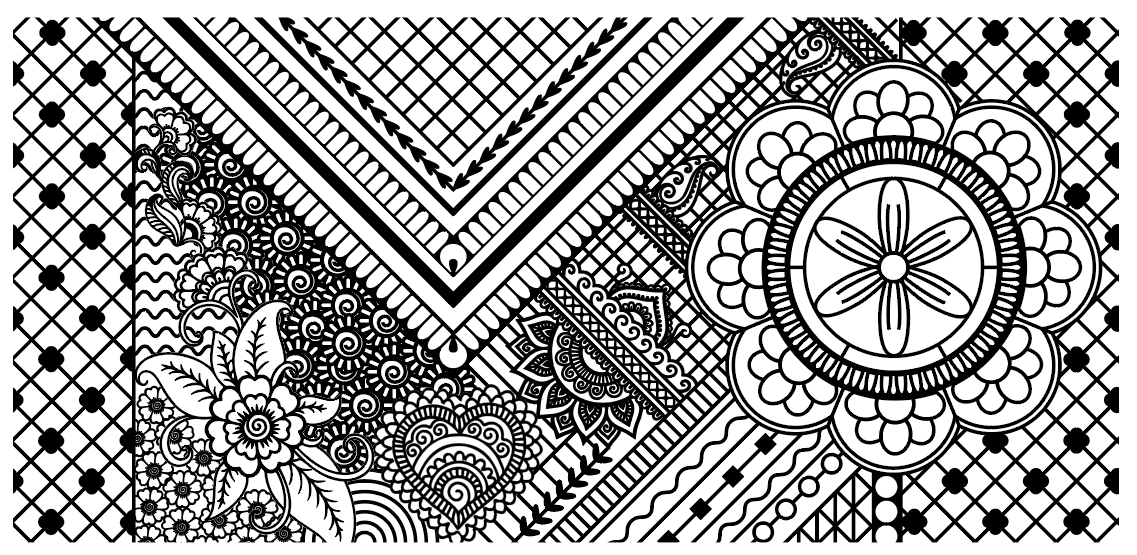
Henna designs usually combine nature with geometric shapes. I studied a range of mehndi patterns, pulled the motifs I liked, and worked them into a sketch of what I was after — not perfect, but it captured the essence.
From hand-drawn to vector
I rebuilt the design in Adobe Illustrator. I thought about just image-tracing my scanned sketch, but I wanted exact measurements and clean, cuttable curves, so I redrew it by hand as vectors — tuning line thicknesses so the fine details wouldn’t burn out or fall apart on the laser cutter.
Cut, stained, assembled
I cut the panels on the laser cutter, stained the wood a warm amber, and joined them into a box with finger-jointed corners. Behind the fretwork sits vellum paper to diffuse the light, and the lid lifts off so the bulb can be reached — its centre is a mandala rosette of its own.
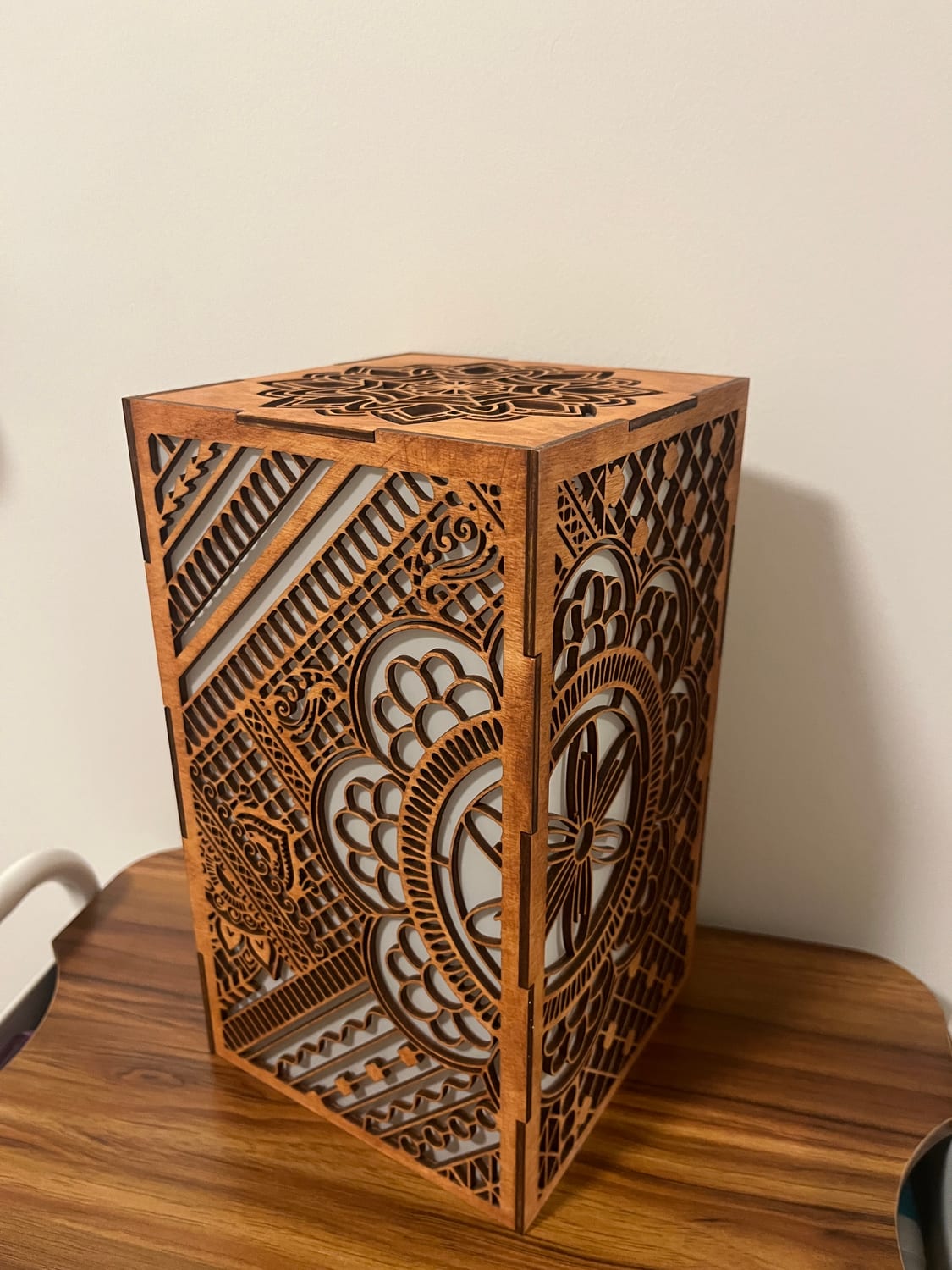
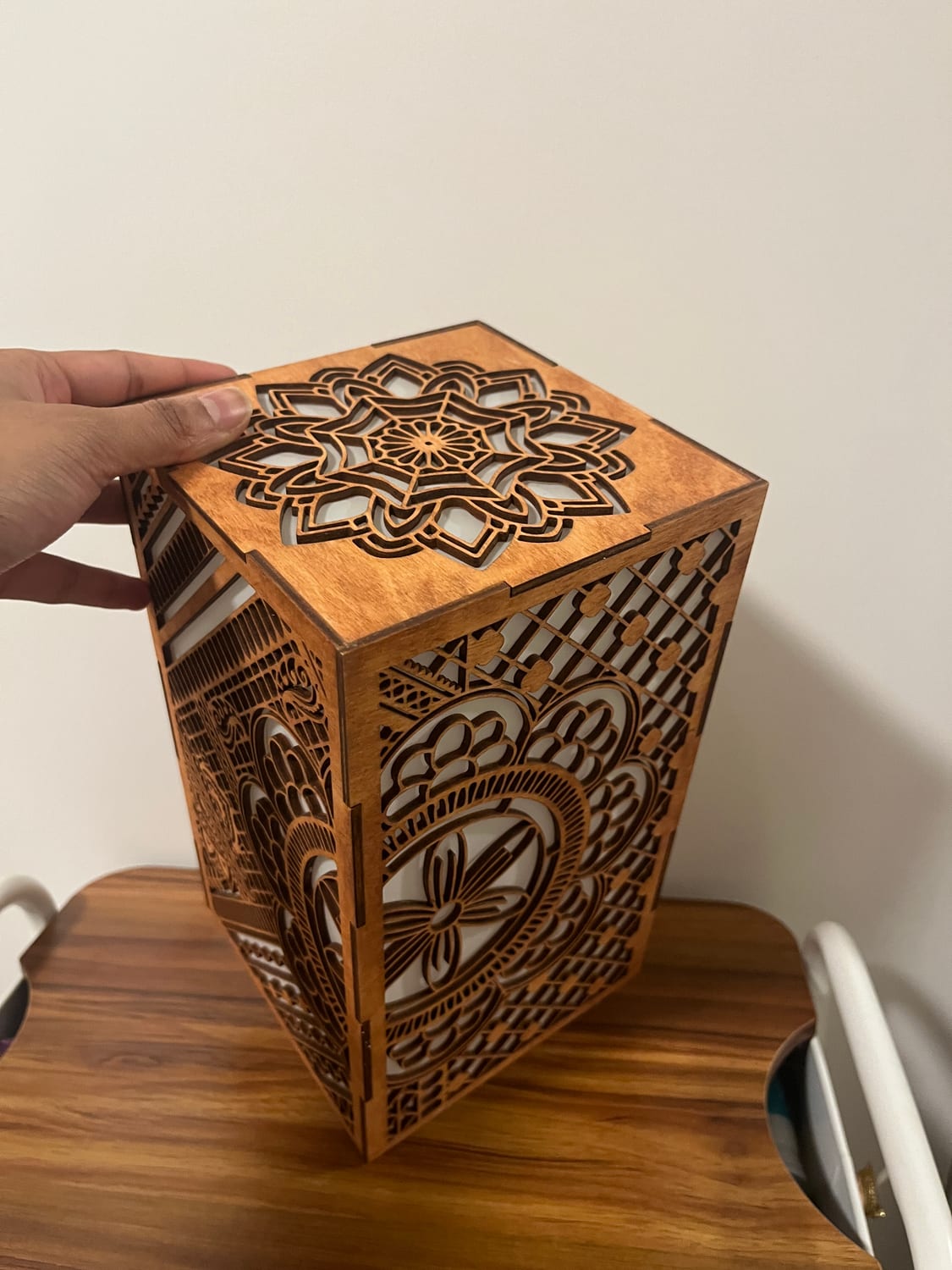
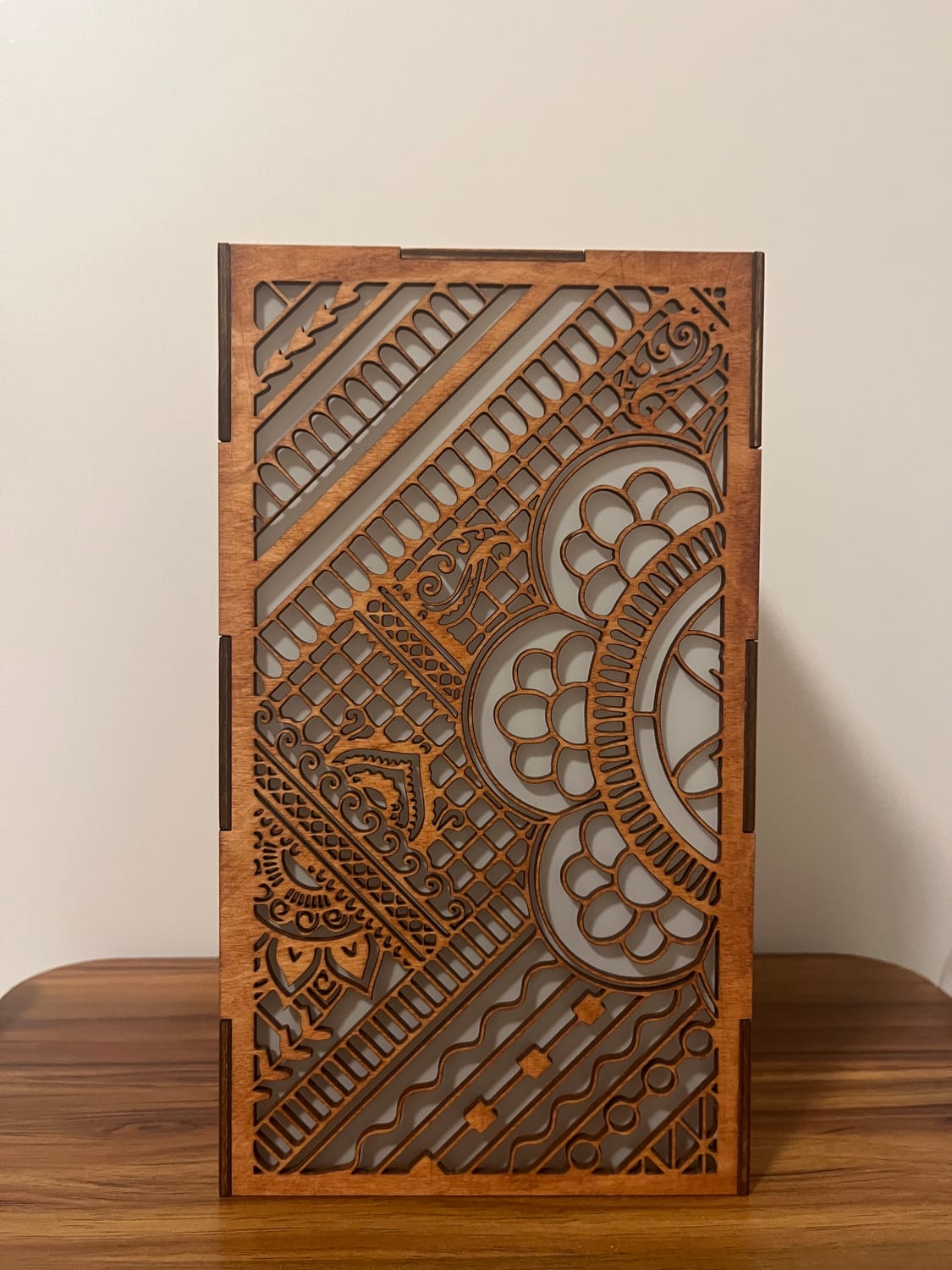
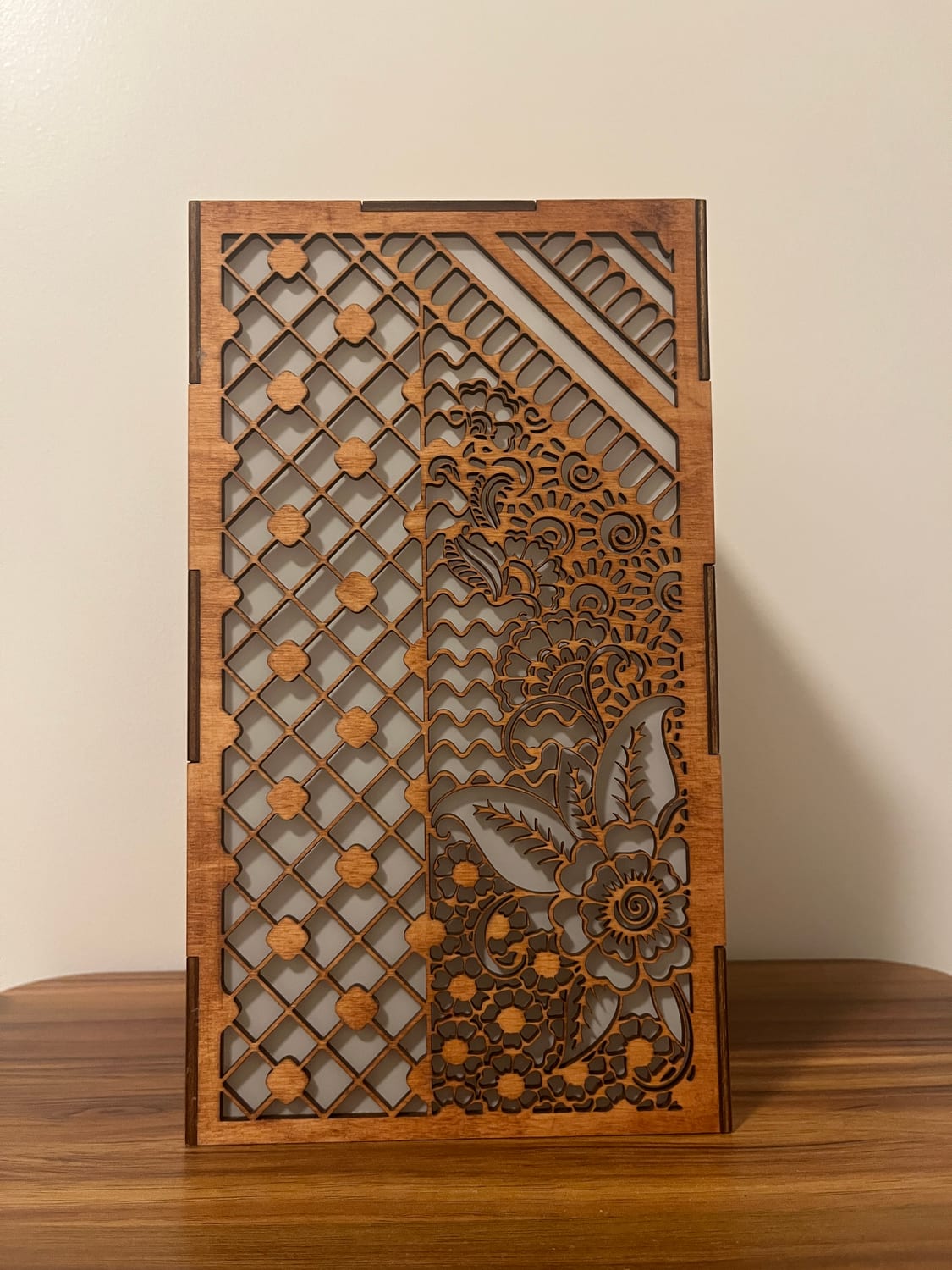
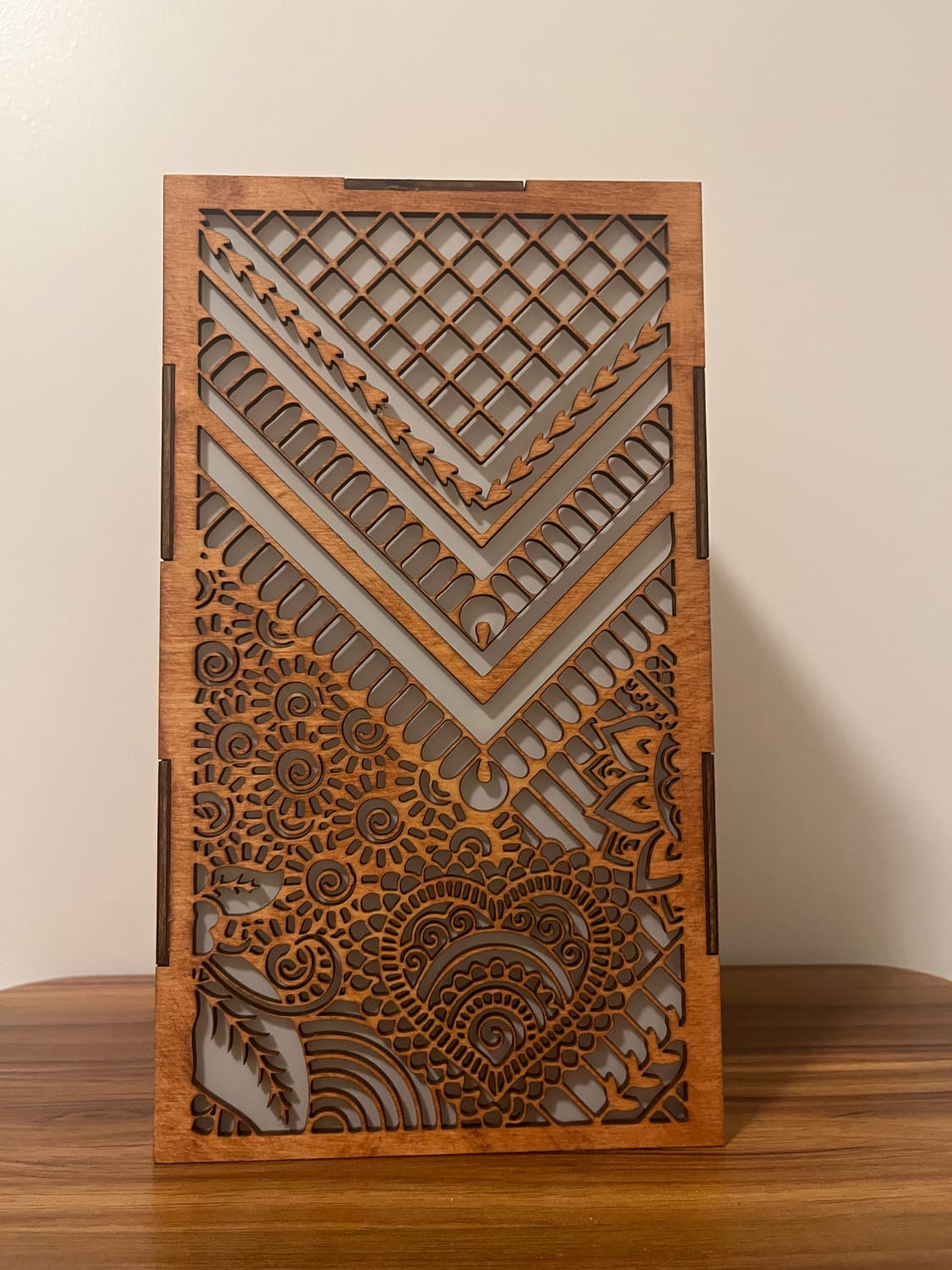
Each of the four faces is its own mehndi composition — borders, lattices, mandalas and paisley — rather than one drawing wrapped around the box. I’d originally hoped a single continuous design would carry across all four sides, but the finger-jointed corners interrupt any line that tries to cross them, so letting each face stand on its own reads far cleaner. Next time I’d design to the seams from the start rather than trying to bridge them.
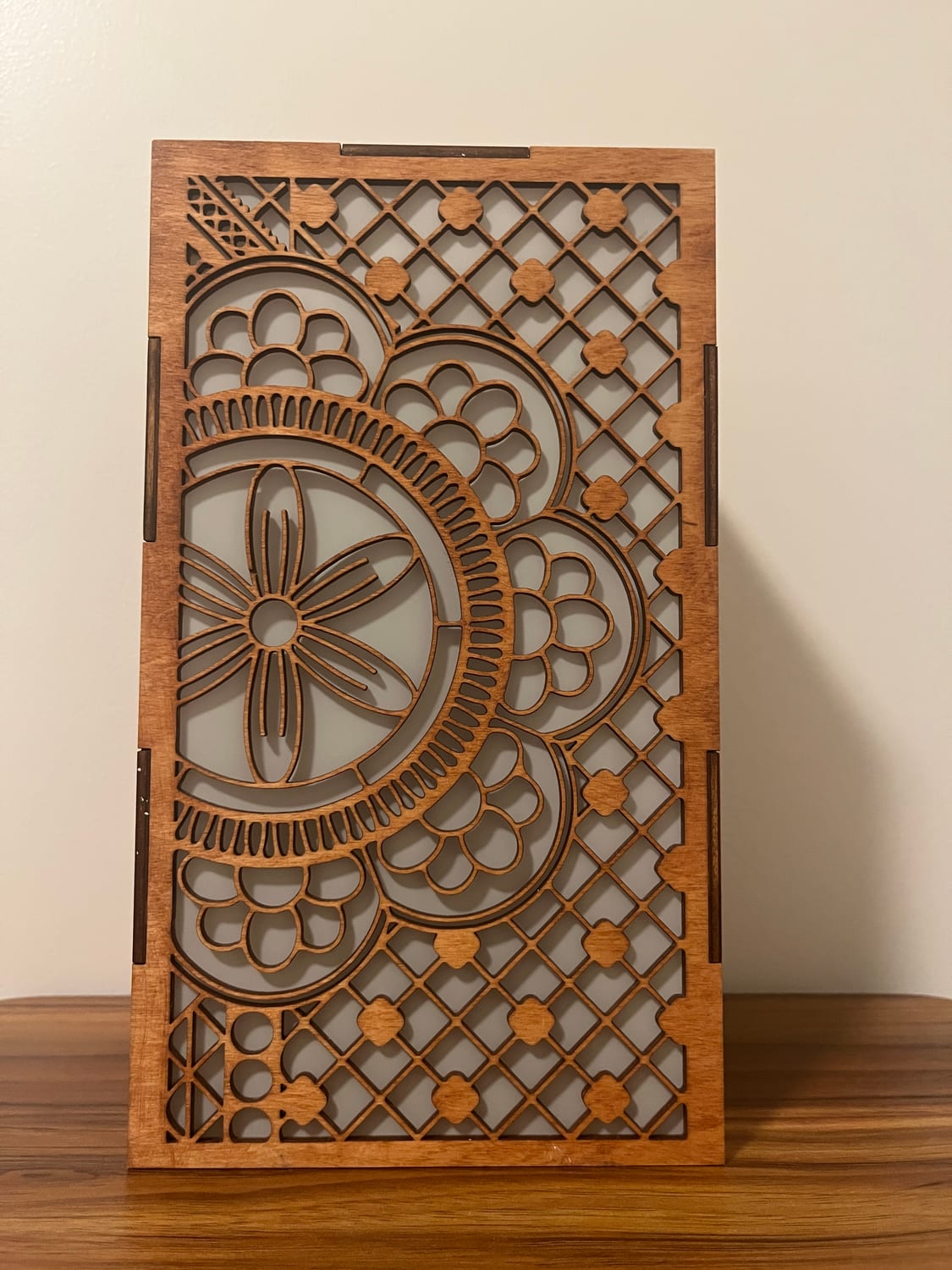
Lit up
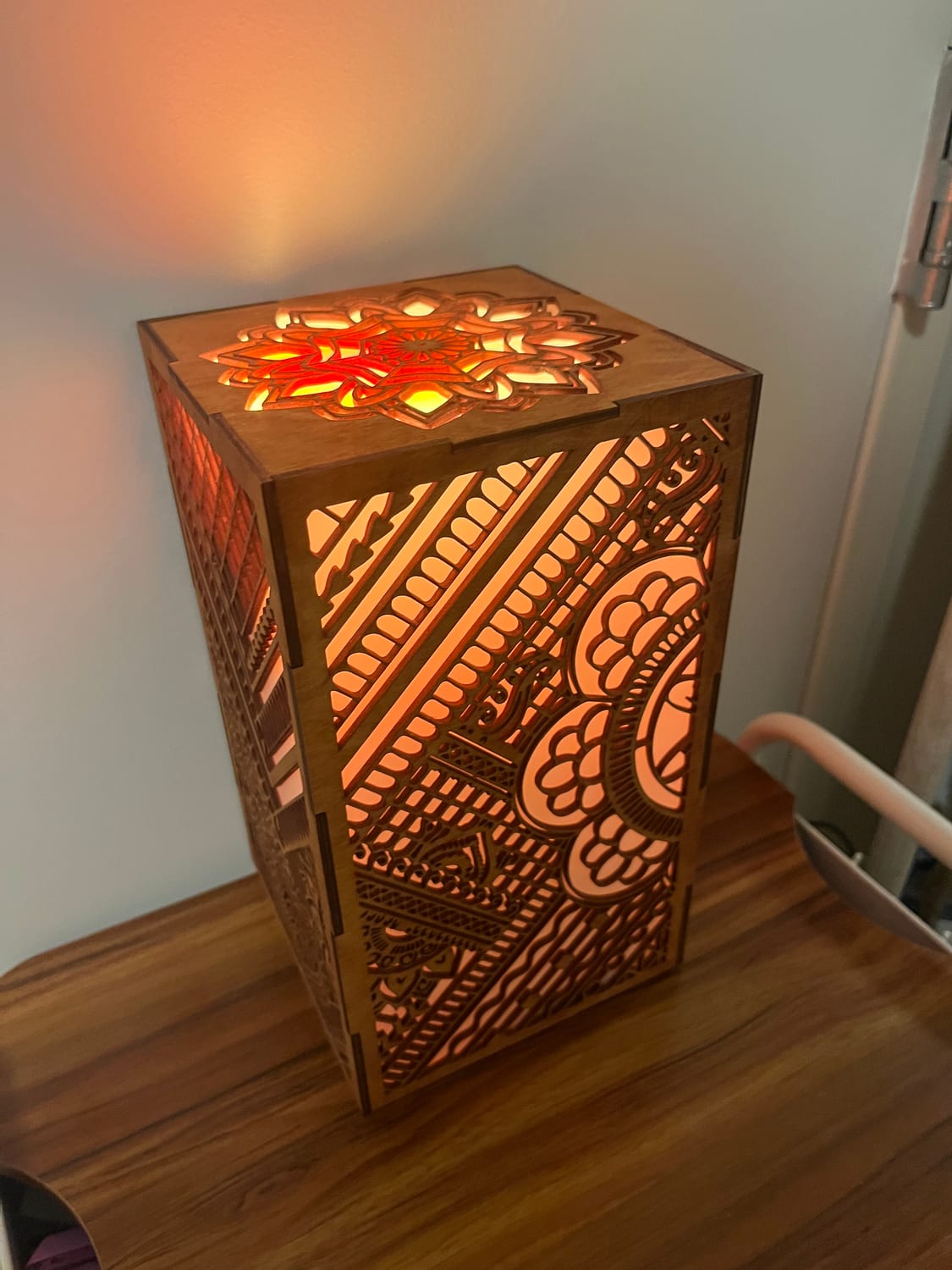
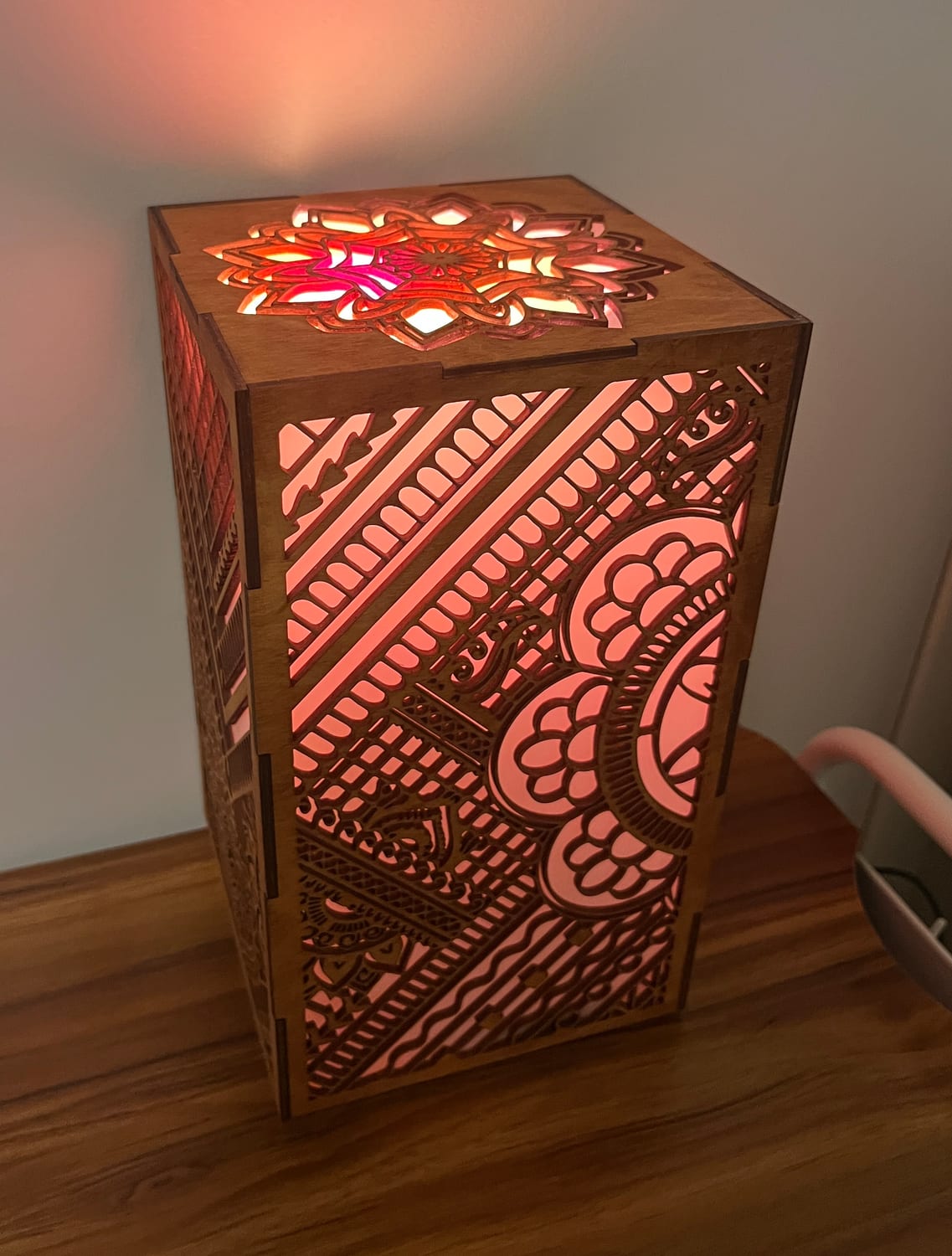
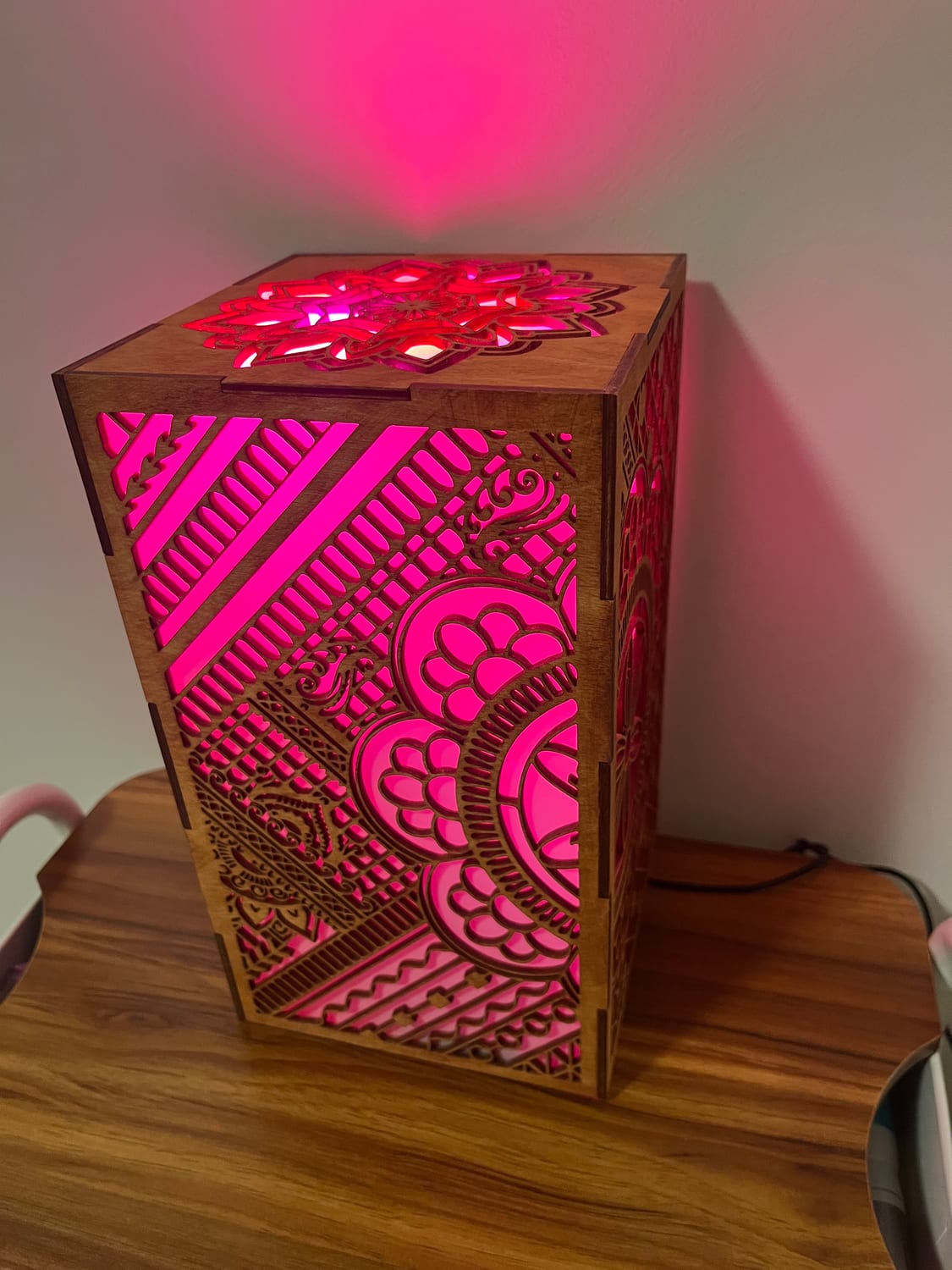
Switched on, the vellum spreads the bulb into an even glow and the fretwork finally does what it was drawn to do — the mehndi reads as light and shadow, and the pattern lifts off the wood. With a colour-changing bulb the whole thing shifts from warm amber to magenta.
📓 Origins / build log: the full day-by-day process — sketches, laser tests, staining, and assembly — lives on my Lawrenceville design portfolio.